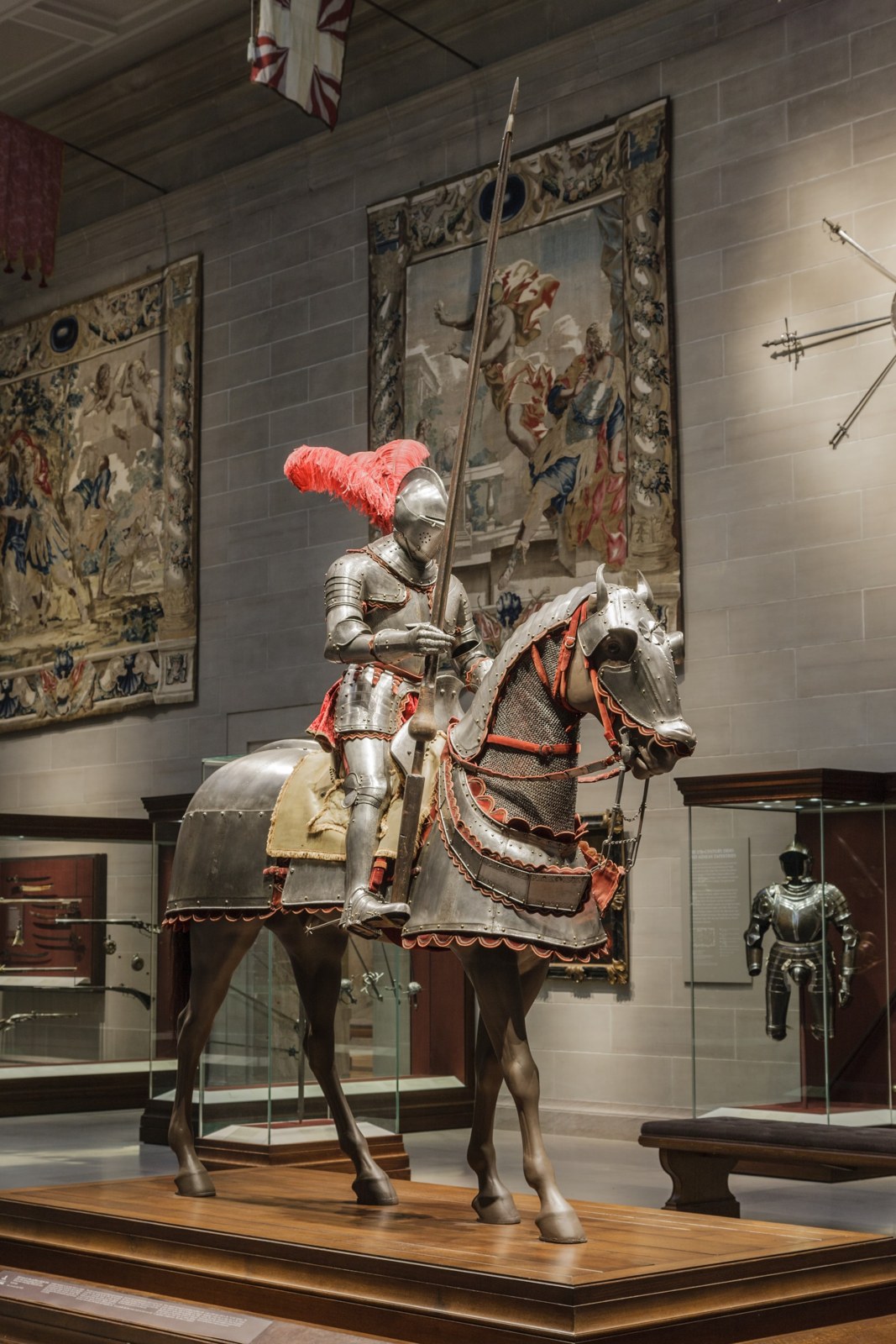
Arms on the rider. Arms on the horse.
Investigate the object ↗John L. Severance Fund · CC0. Resized without cropping or recolouring.
A coat of arms can move from a shield to a window and still be recognizable. Learn how that works, draw your own examples, and investigate what surviving objects can actually tell us.
✦ Start with the design
Heraldry is a way to describe a design, recognize it, and investigate its use. Recognizing a lion is a beginning. We also need to know which features identify the arms, who used them, and what supports that connection. The drawings let you test the first question; the documents and object studies help with the others. A matching surname, unfortunately, cannot do all that work for us.
✦ Choose your entrance
If a word is unfamiliar, start with a reading. If an arrangement is unclear, change it in the Atelier. If a claim sounds too easy, follow its source. Each route gives you a different way to test what you think you know.
Twelve readings explain how a shield is composed, how we describe it, and what evidence connects it to a bearer.
Enter the academyChange colours, charges and ordinaries. Watch the heraldic grammar respond.
Open the atelierA multilingual primary-source atlas, a field guide and links to the actual authorities.
Explore the sources✦ Try the arrangement
Choose a simple composition, then change one element and compare the blazons. The changed words help identify what the changed drawing communicates.
✦ Beyond the shield
Crests, mantling, supporters, badges, mottos and signs of office have their own histories. Their meaning changes across jurisdictions and through time. Eight original research readings and a comparative anatomy laboratory let you study those differences, rather than applying one country's rules to the whole world.
✦ The material evidence
The same design can appear on armour, glass, or cloth, but those objects preserve different evidence. A coin can state a royal claim; a chapel photograph can record a display on a particular day. These 35 studies work through what we can see, what the sources establish, and what we still need to investigate.
Enter the object-study collection ↗ John L. Severance Fund · CC0. Resized without cropping or recolouring.
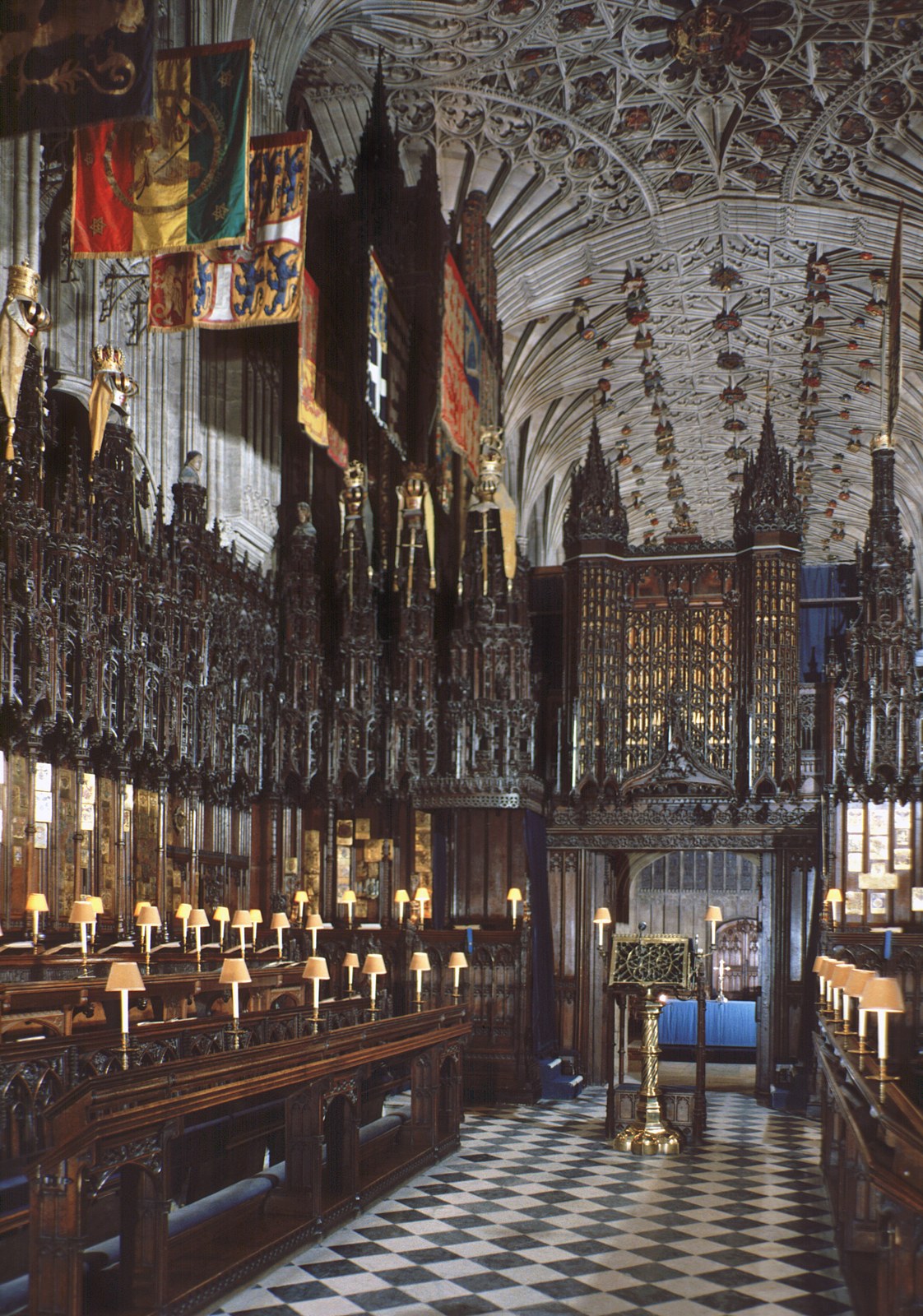
Modern photographic witness; arrangement shown is from 1983
Investigate the object ↗Photo by Serendigity · Public domain. Resized without cropping or recolouring.
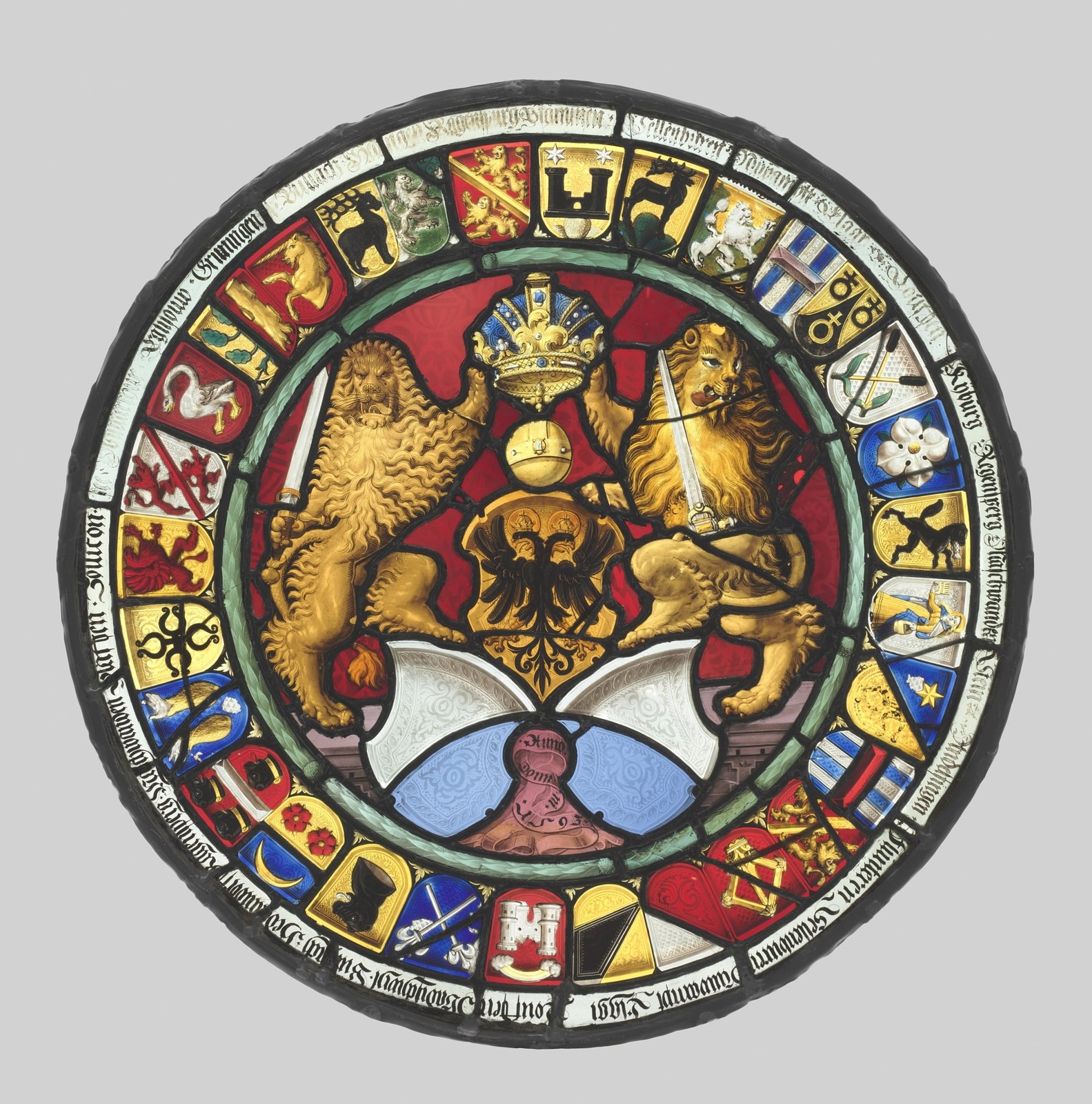
Purchase from the J. H. Wade Fund · CC0. Resized without cropping or recolouring.
✦ The introductory course
Start in the twelfth century. Finish by researching and designing a defensible original armorial study.
View the full curriculum ↗How armorial identity survives changing artwork, audiences, and documentary witnesses.
Read the components of an achievement as a set of relationships, roles, and institutional claims.
Read metals, colors, furs, and contrast through worked designs and dated records, including buff, copper, Rose, Bleu Céleste, and red ochre.
Partitions, positions, arrangements, and transformations—and why geometry alone cannot identify a bearer.
How bands, crosses, borders, and smaller geometries behave as named figures with edges and layers.
Identify a figure through its morphology, attitude, attributes, arrangement, and source-language conventions.
✦ The international research programme
An English grant, a German register, and a Flemish statute answer different questions because they belong to different institutions. The regional chapters follow those differences through the original sources. Japanese kamon provide a further test: we can compare visual devices without assuming that every tradition uses the same categories.
✦ The scope of the research
English practice is one starting point. It cannot explain every place in which people use emblems.
✦ Research & discoveries
New scholarship, newly examined objects, and heraldry still being used. A small international reading list with links to the original reporting.
Explore all news ↗Mediterranean Europe
A study of merchant marks preserved in late-medieval financial documents examines how commercial symbols helped merchants maintain recognizable identities across Mediterranean trading networks. Of 738 recorded instances dated 1387–1435, the authors classified 72 as heraldic or heraldic-derived; most were not armorial.
Source: Medievalists.net · Research reporting · English
Context and connectionsEngland and Europe
The developers of Chronicles: Medieval say they consulted the College of Arms and Lancaster Herald Adam Tuck while building the game's heraldic system. The reported research drew on rolls of arms, seals, tombs and other witnesses, with reconstructions where documentation was incomplete.
Source: Simulation Daily · Industry reporting · English
Context and connectionsLithuania
A reconstruction of the arms used by Antanas Baranauskas, nineteenth-century poet and bishop of Sejny (Augustów), is a focus of the international exhibition 'Tradicija, tapatybė ir menas' in Anykščiai. Heraldic artists Paulius Vaniuchinas and Žydrūnas Strumila worked from surviving armorial seals and impressions, with advice from historian Edmundas Antanas Rimša. At the October 17 opening, a local memorial museum presented two authentic episcopal seals and a document bearing Baranauskas's signature in Lithuanian.
Source: Genealogijos, heraldikos ir veksilologijos institutas · Institutional exhibition report · Lithuanian
Context and connectionsA blazon gives another artist enough information to draw the same arms. The drawings can differ while the identifying design remains recognizable.
The idea behind this project✦ Beyond the classroom
A crest sits above a helmet, while the arms appear on the shield. Once we can describe the parts, we can ask whose display this was and which records connect it to that person. The field guide introduces those questions and points you toward the relevant authorities.
Read the field guide ↗Explore the colour laboratory ↗✦ Following an attribution
Finding your surname beside a shield gives you a search lead. Establishing a right to those arms takes a documented relationship and the rules of the relevant tradition. The difference matters whether you are researching an ancestor or designing something new.
Meet the authorities ↗