✦ Heraldry in the material world

Arms you can investigate.

39 objects and displays, from medieval textiles to modern chapel banners. Ask what an image tells us—and what it leaves unresolved.

Begin with the object.

These studies reproduce licensed museum and archival photographs, including dated views of modern displays. Dates, identifications, and attributions come from the linked source records; our visual observations and research questions are editorial teaching notes. Specialist review remains pending.

✦ Explore the collection

Choose an object to investigate.

39 studies shown

Periods overlap for broadly dated objects. “Modern” includes dated photographs of longstanding institutions.

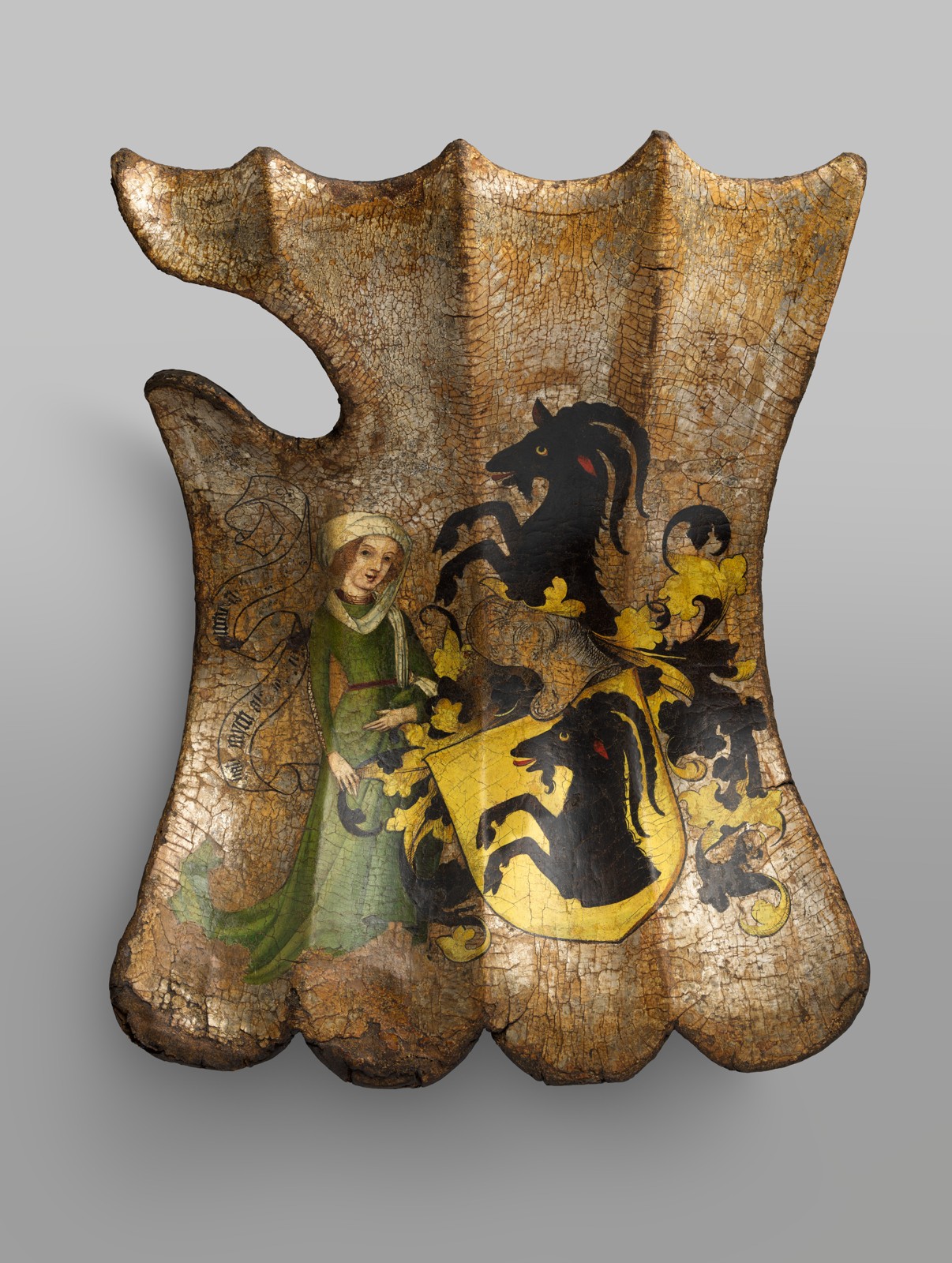
A scalloped tournament shield painted with a woman, a yellow armorial shield bearing a black animal head, and a helmet with a matching crest above it.

Gift of Mrs. Florence Blumenthal, 1925 · CC0. Resized without cropping or recolouring.

German · ca. 1450

A shield that contains a shield

A painted targe carries a smaller armorial shield. Reading the two separately helps us understand the object without settling its disputed family attribution.

The Metropolitan Museum of Art
Accession 25.26.1
Open the object study ↗
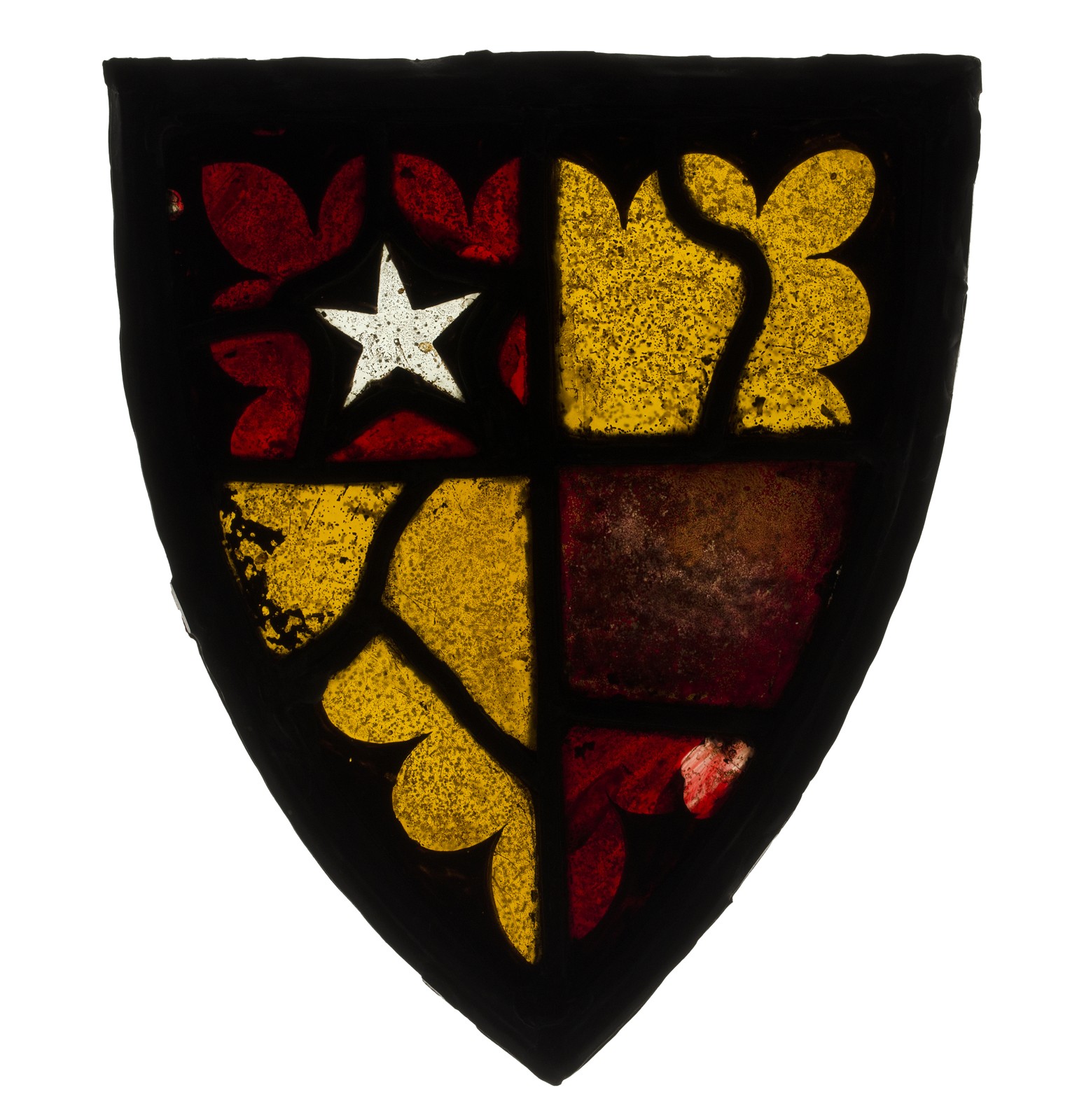
A shield-shaped stained-glass panel with red and yellow areas, a pale five-pointed star at upper left, and dark structural lines and irregular joins.

Rogers Fund, 1912 · CC0. Resized without cropping or recolouring.

British · 1300–1320

Light passing through arms

A small stained-glass shield asks how much a photograph can tell us about colour, repair, and original setting.

The Metropolitan Museum of Art
Accession 12.137.2

Open the object study ↗
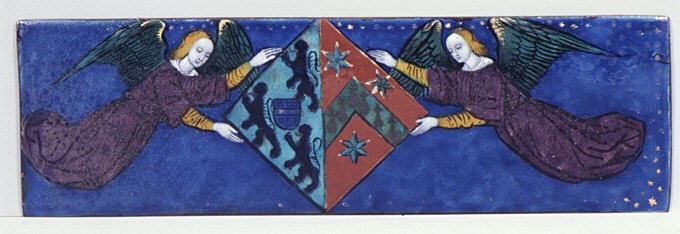
A long blue enamel plaque with winged angels holding a central shield divided vertically: dark animal forms on the viewer’s left, and a chevron with three stars on red at right.

Bequest of Benjamin Altman, 1913 · CC0. Resized without cropping or recolouring.

French, Limoges · First quarter of the sixteenth century

Two coats, one painted shield

An enamel plaque joins two armorial compositions while leaving its original larger setting uncertain.

The Metropolitan Museum of Art
Accession 14.40.697d

Open the object study ↗
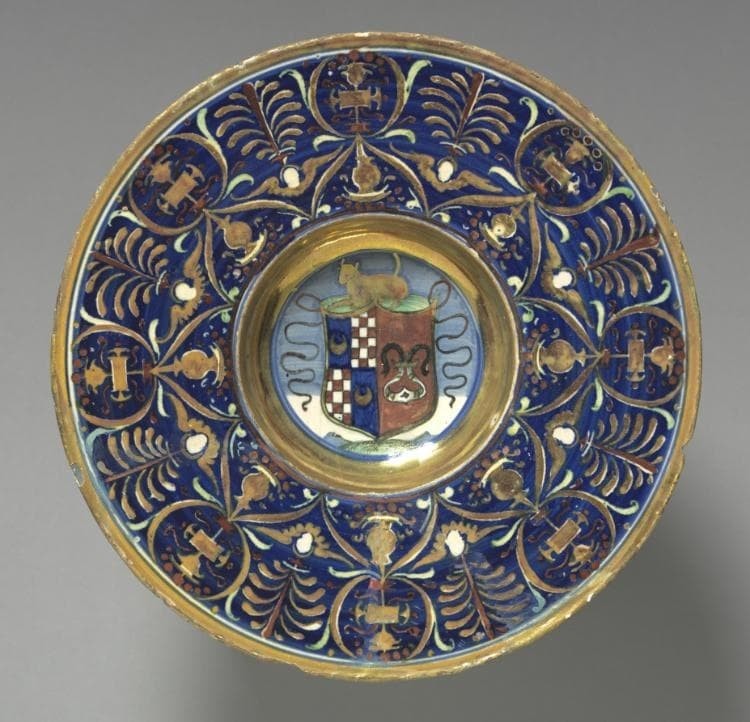
An Italian plate with a blue and gold ornamental rim and a central shield containing checked compartments, crescent shapes, and a red area; an animal appears above the shield.

Purchase from the J. H. Wade Fund · CC0. Resized without cropping or recolouring.

Italy, Urbino region, Gubbio · 1527

Arms at the centre of the table

An Italian maiolica plate puts a family identification inside a much larger decorative composition.

Cleveland Museum of Art
Accession 1950.155

Open the object study ↗
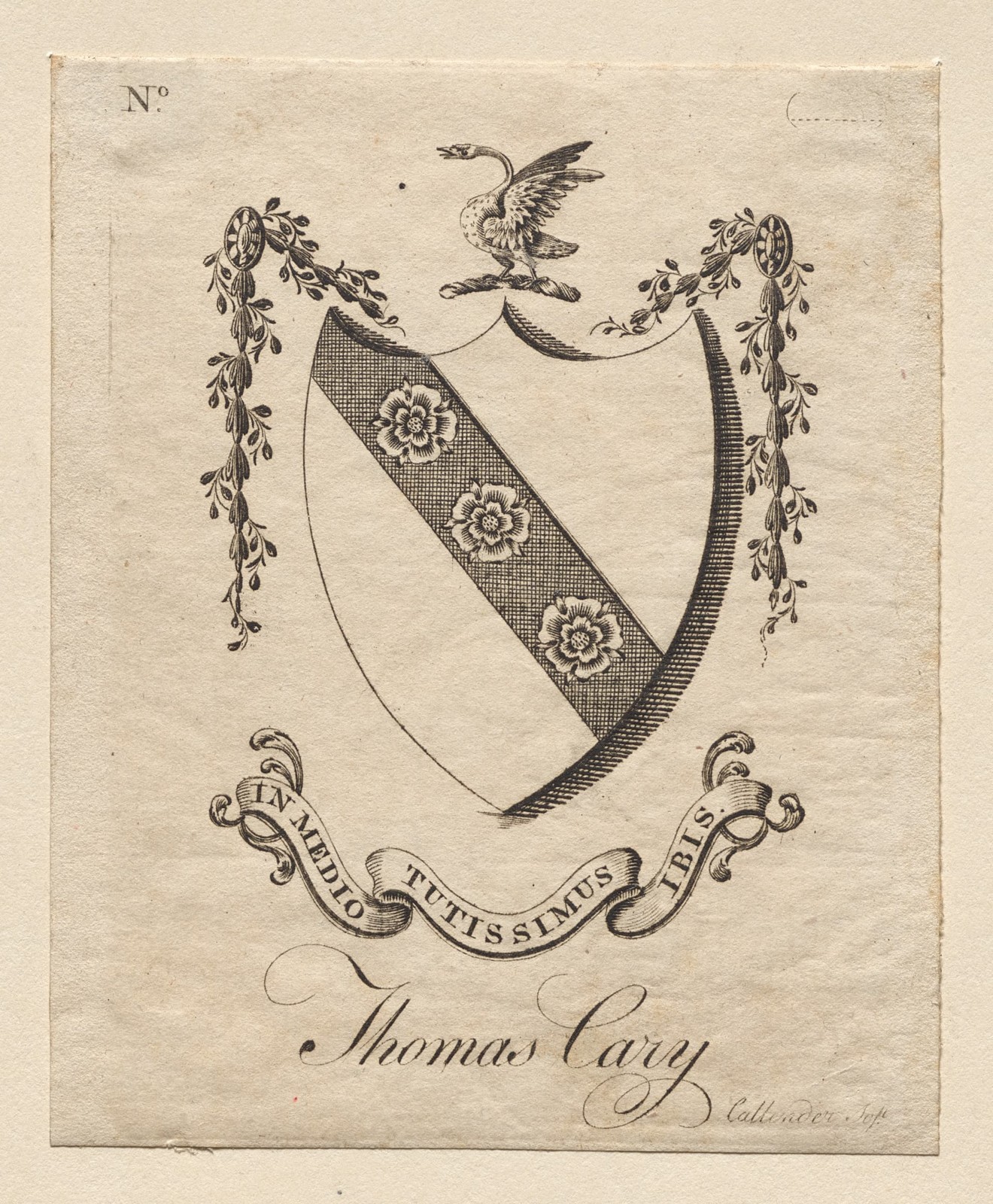
An engraved bookplate with a diagonal band bearing three roses on a shield, a bird above a wreath, hanging foliage, a motto scroll, and the name Thomas Cary below.

General Income Fund · CC0. Resized without cropping or recolouring.

America, late eighteenth–early nineteenth century · 1766–1821 (catalogue range)

A name beneath the shield

An American engraving connects an armorial image to a printed name while leaving the history of this particular impression open.

Cleveland Museum of Art
Accession 1918.149

Open the object study ↗
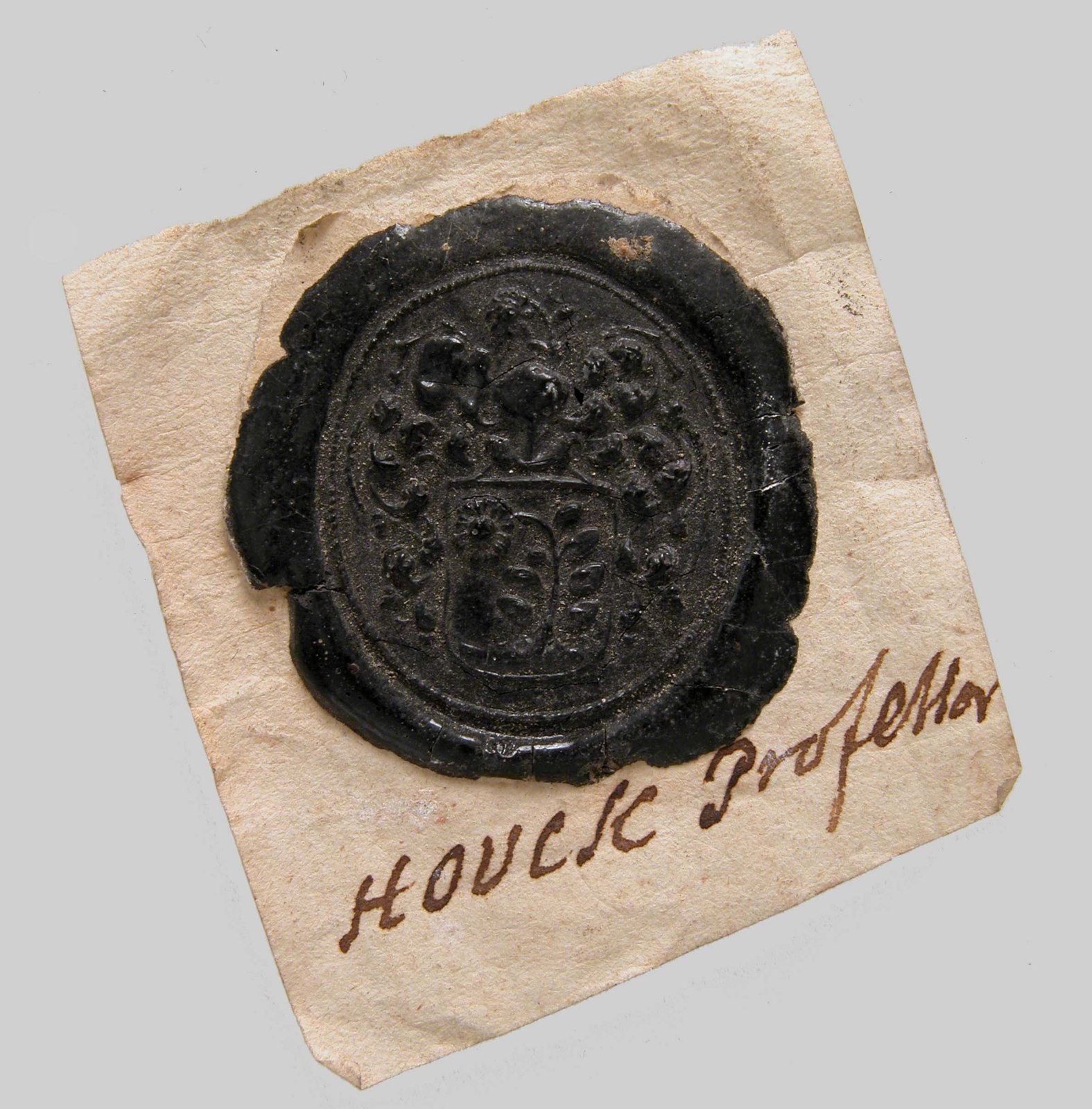
A dark circular seal impression on a pale rectangular mount, with a central shield bearing a branching motif, helmet and surrounding ornament; cracks interrupt its edge.

Gift of H.P. Kraus, 1981 · CC0. Resized without cropping or recolouring.

Netherlandish or South Lowlands (?) · 12th–16th century

The wax is black. What were the arms?

An armorial wax impression preserves a design while leaving its tinctures, precise date, and bearer unresolved in this study.

Armorial seal impression

The Metropolitan Museum of Art
Accession 1981.534.7

Open the object study ↗
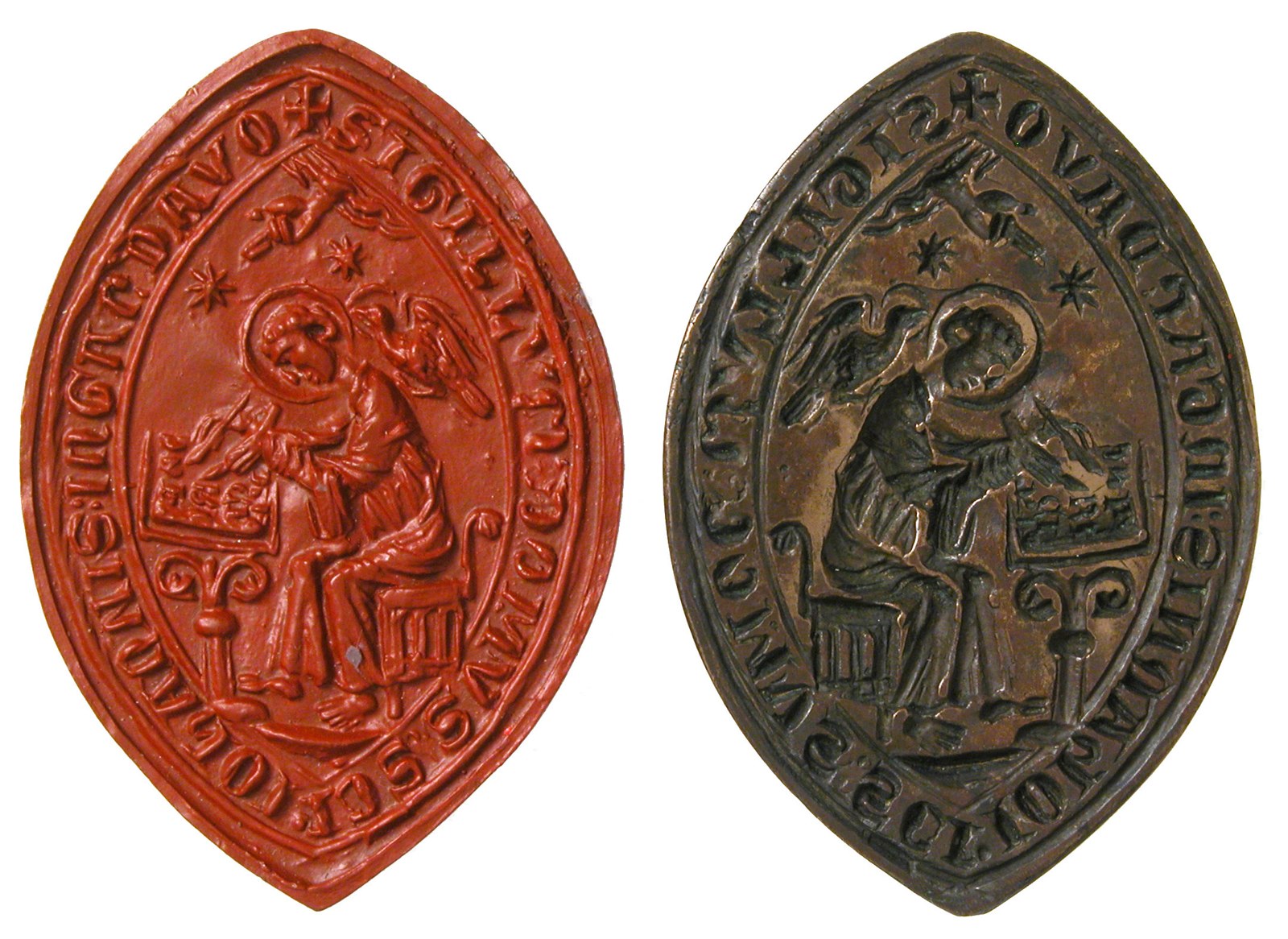
A pointed oval metal seal matrix at right and an orange impression at left, with reversed arrangements of a haloed seated figure, a small animal, stars and a lettered border.

Rogers Fund, 1981 · CC0. Resized without cropping or recolouring.

South Netherlandish · 19th or 20th century (13th century style)

Medieval style. A later object.

A bronze matrix made in the nineteenth or twentieth century uses a thirteenth-century style. Its manufacture and the historical reference of its design need separate dates.

Comparative seal imagery; no arms identified in this study

The Metropolitan Museum of Art
Accession 1981.291

Open the object study ↗
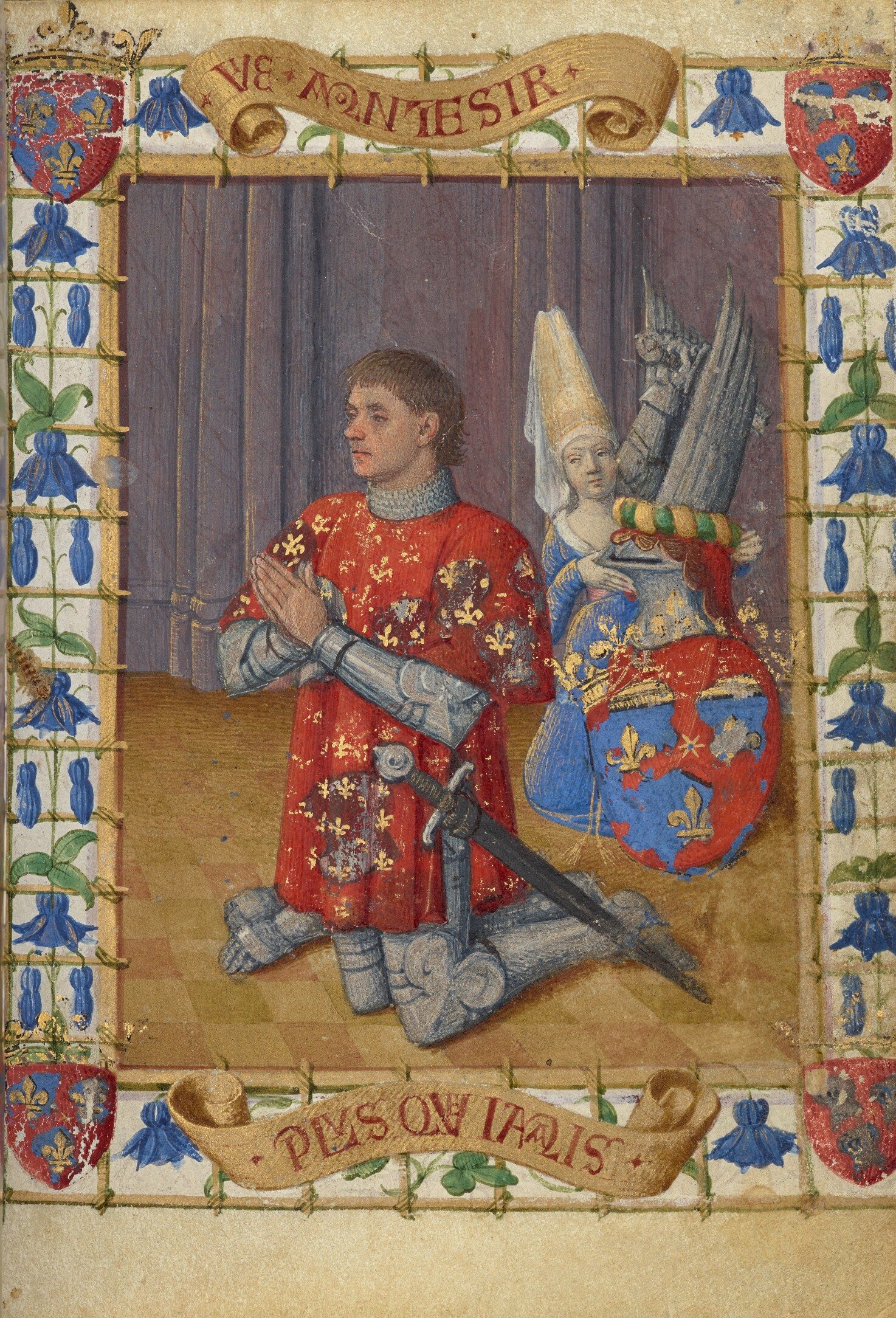
An illuminated manuscript leaf showing an armoured man kneeling beside a woman who holds a shield, with armorial corners, flowers, and two gold scrolls bearing red lettering.

Partial gift of Gerald F. Borrmann · CC0. Resized without cropping or recolouring.

French · 1455 (catalogue date)

The words survived. Which arms did?

A French illuminated leaf puts personal mottoes beside armorial surfaces whose later changes matter to their interpretation.

The J. Paul Getty Museum, Los Angeles
Accession 85.ML.27.2

Open the object study ↗
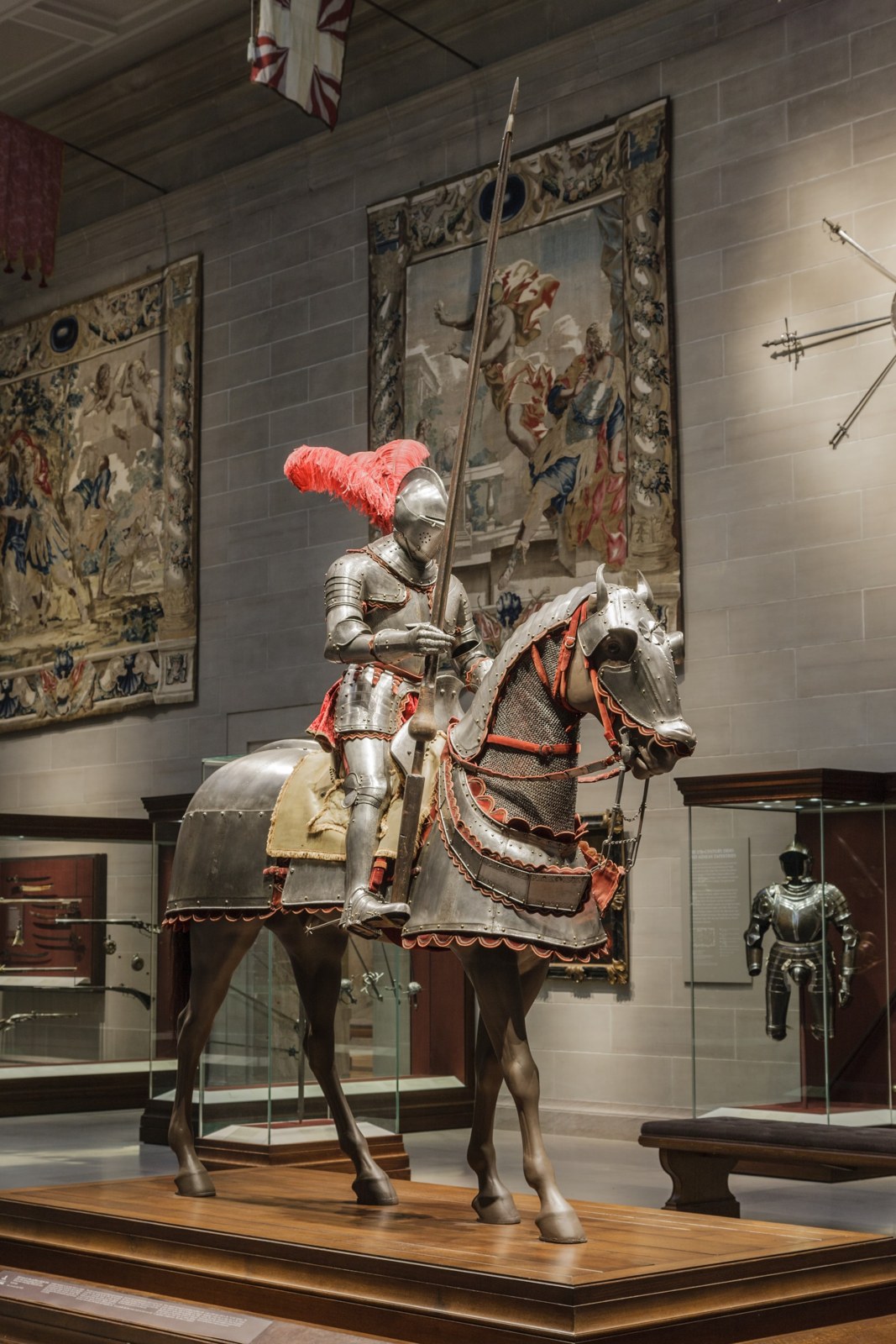
A fully armoured rider sits above an armoured horse. Red fabric, etched metal, and the museum’s supporting mount make this a much larger display than a single painted shield.

John L. Severance Fund · CC0. Resized without cropping or recolouring.

North Italy, 16th century · c. 1575

Arms on the rider. Arms on the horse.

Repeated arms connect the rider’s equipment with the horse’s armour. Establishing who used it and which pieces began together takes more than matching decoration.

Cleveland Museum of Art
Accession 1964.88

Open the object study ↗
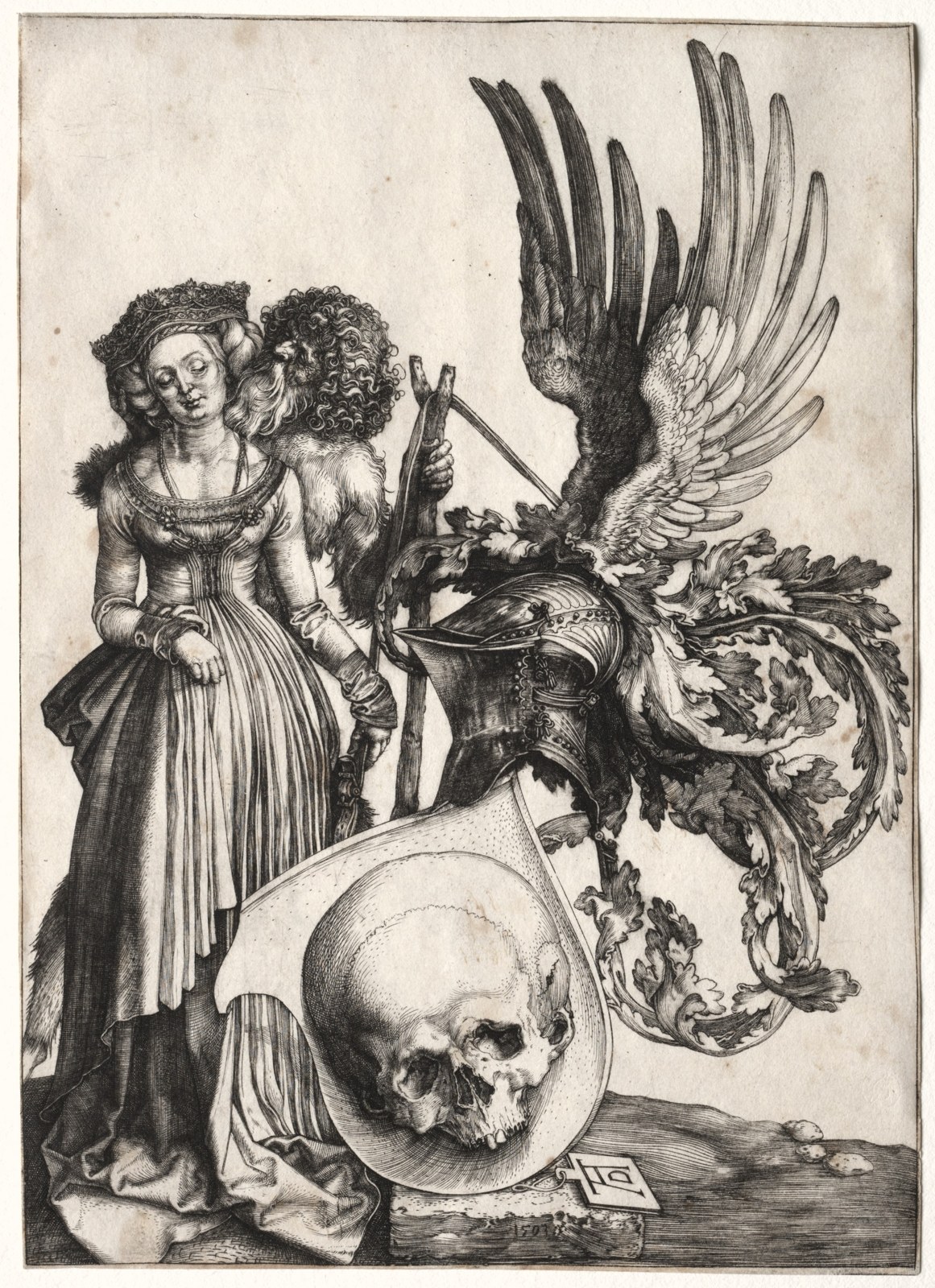
A large skull occupies a tilted shield beneath a helmet and an elaborate winged ornament. A woman and a hairy male figure stand beside the display.

John L. Severance Fund · CC0. Resized without cropping or recolouring.

Germany, early 16th Century · 1503

A coat of arms for an argument

Dürer’s skull-bearing achievement makes heraldic form carry an allegory rather than an identified family pedigree.

Allegorical achievement; no historical bearer identified

Cleveland Museum of Art
Accession 1953.9

Open the object study ↗
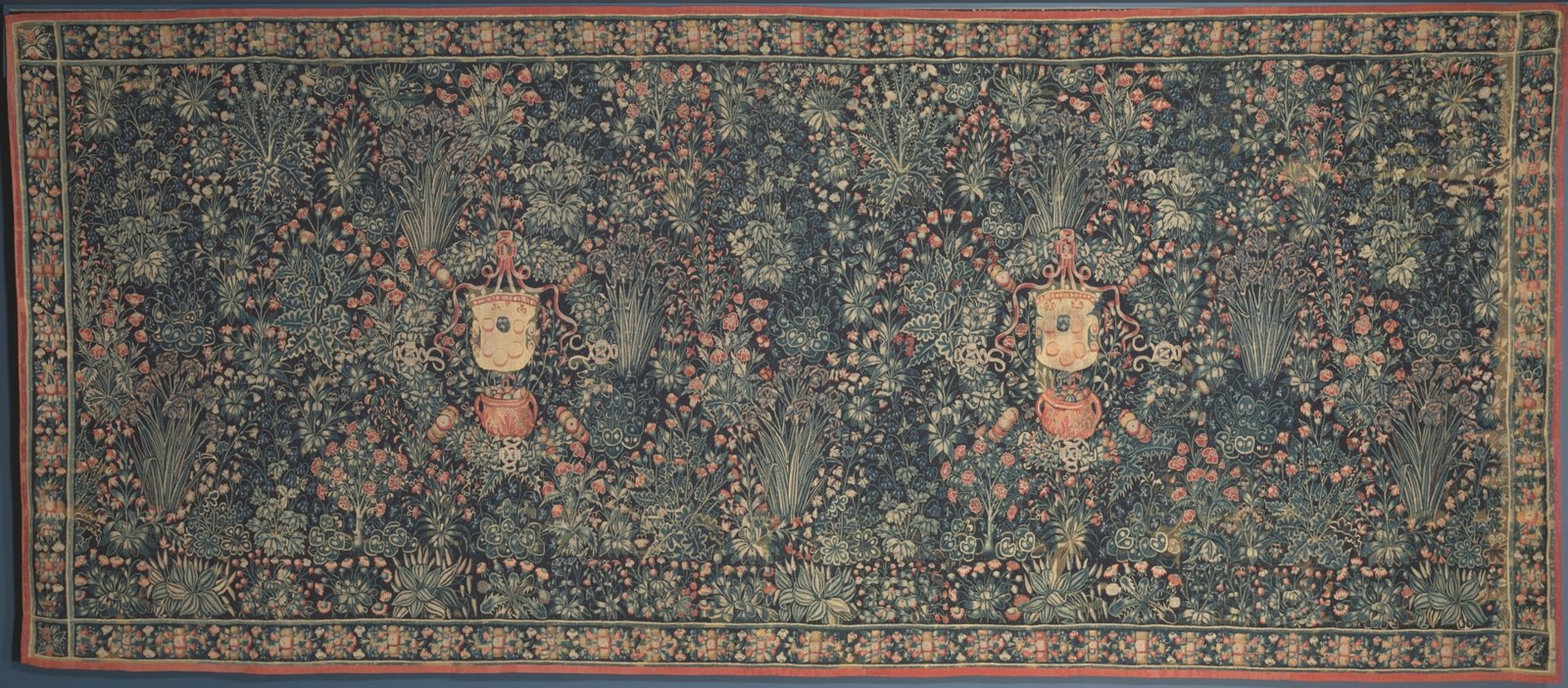
Two circular armorial displays interrupt a dense field of flowers. A narrow border encloses the horizontal textile, while repeated plant forms continue between the shields.

Bequest of John L. Severance · CC0. Resized without cropping or recolouring.

Netherlands, Hainault, early 16th century · 1520s

The arms changed. The flowers stayed.

A millefleurs tapestry becomes a witness to altered ownership because its Medici arms replaced an earlier composition.

Cleveland Museum of Art
Accession 1942.824

Open the object study ↗
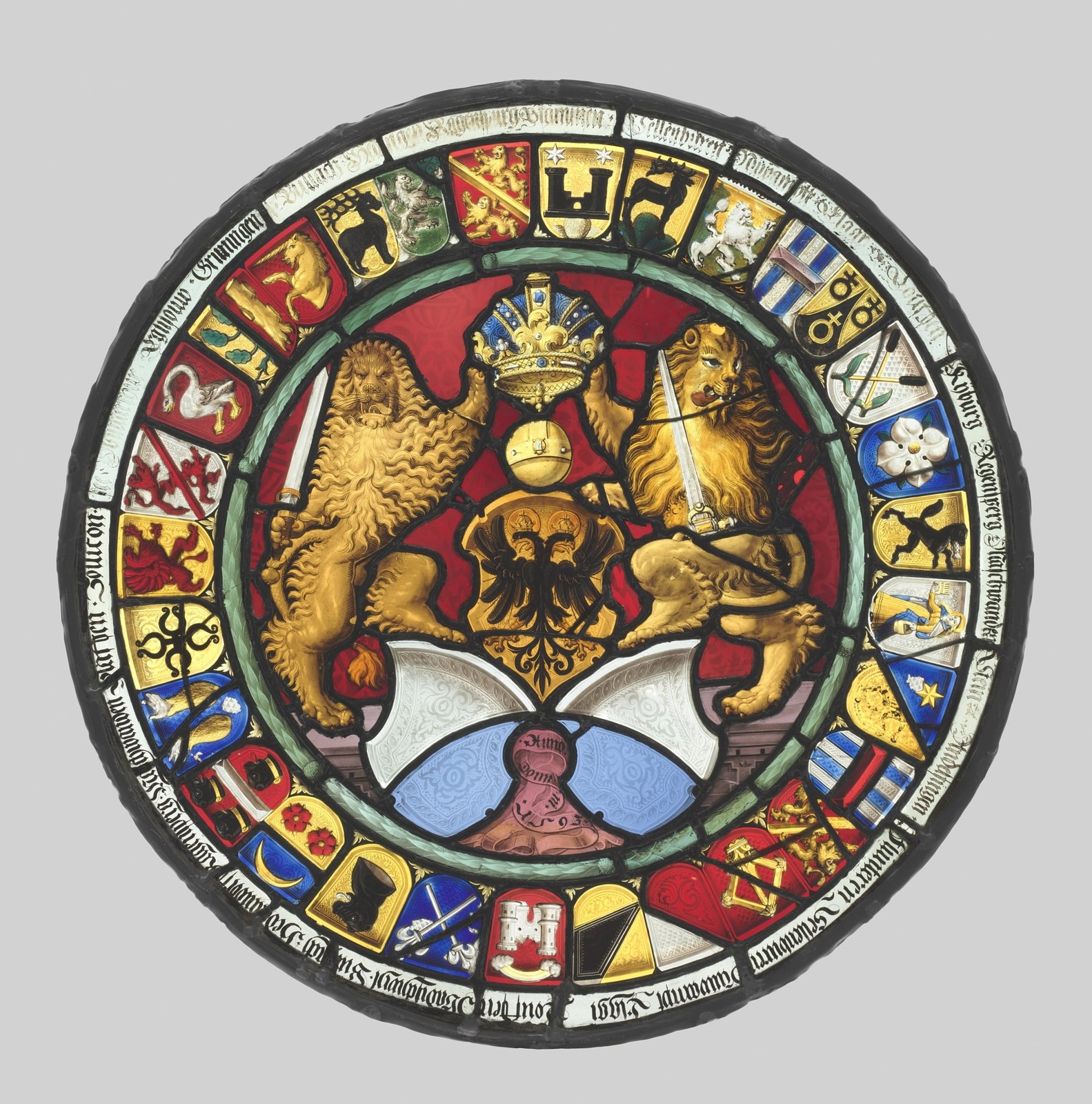
A central eagle shield, a crown, and paired lions occupy the largest area. Smaller shields form a ring around them, enclosed by lettering and a coloured border.

Purchase from the J. H. Wade Fund · CC0. Resized without cropping or recolouring.

Switzerland, Zurich, late 16th Century · 1593

A city arranged around a shield

Zürich’s roundel combines civic and imperial imagery, with a ring of small arms that invites careful counting.

Cleveland Museum of Art
Accession 1955.71

Open the object study ↗
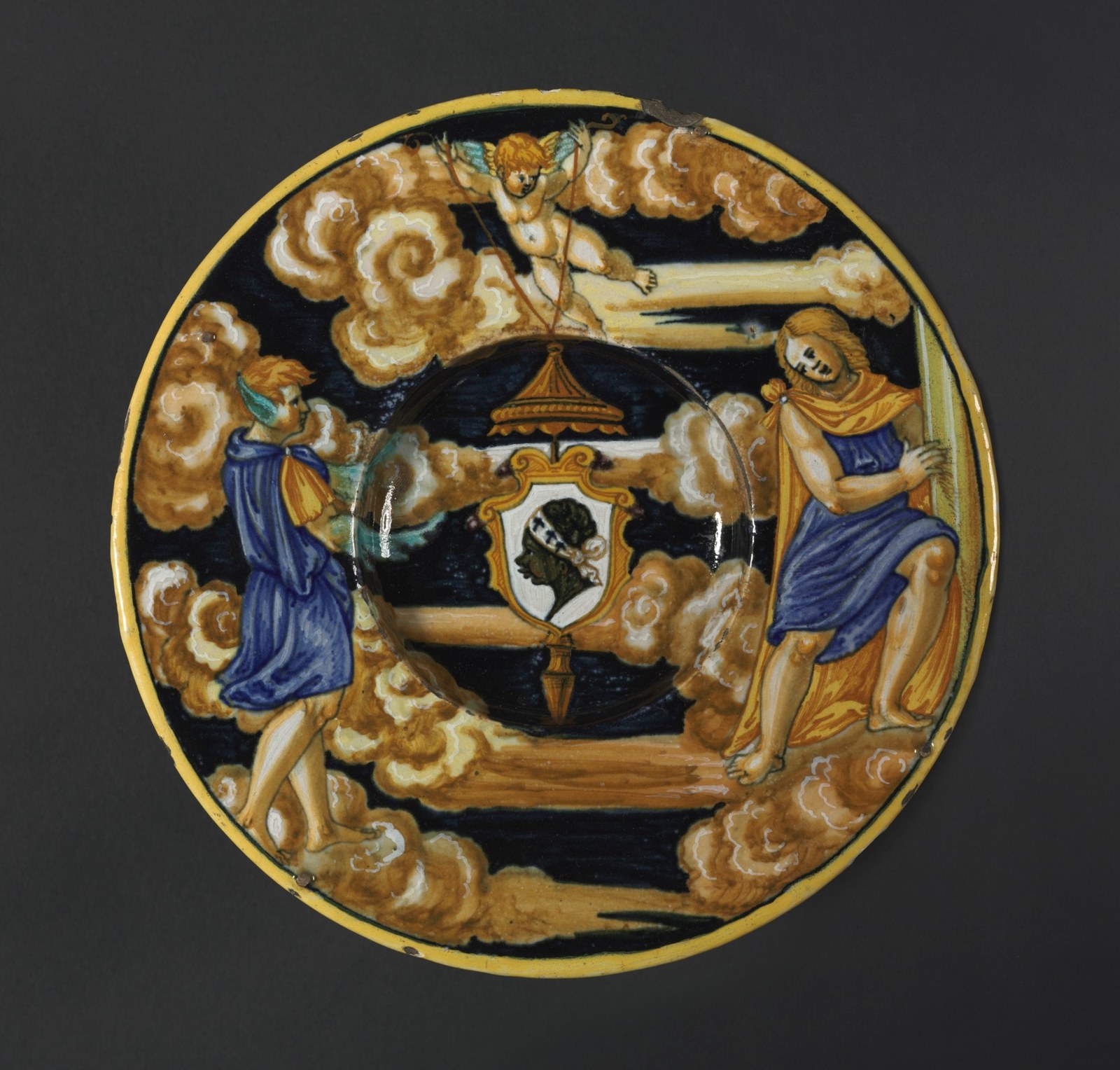
A small shield with a dark profile head sits near the centre of a richly painted plate. A winged child holds it amid larger figures, clouds, a column, and a yellow rim.

Bequest of John L. Severance · CC0. Resized without cropping or recolouring.

Italy, Urbino · 1532

A family device in a crowded sky

A painted plate places Pucci arms inside a figurative scene, joining domestic display with a difficult history of representation.

Cleveland Museum of Art
Accession 1942.625

Open the object study ↗
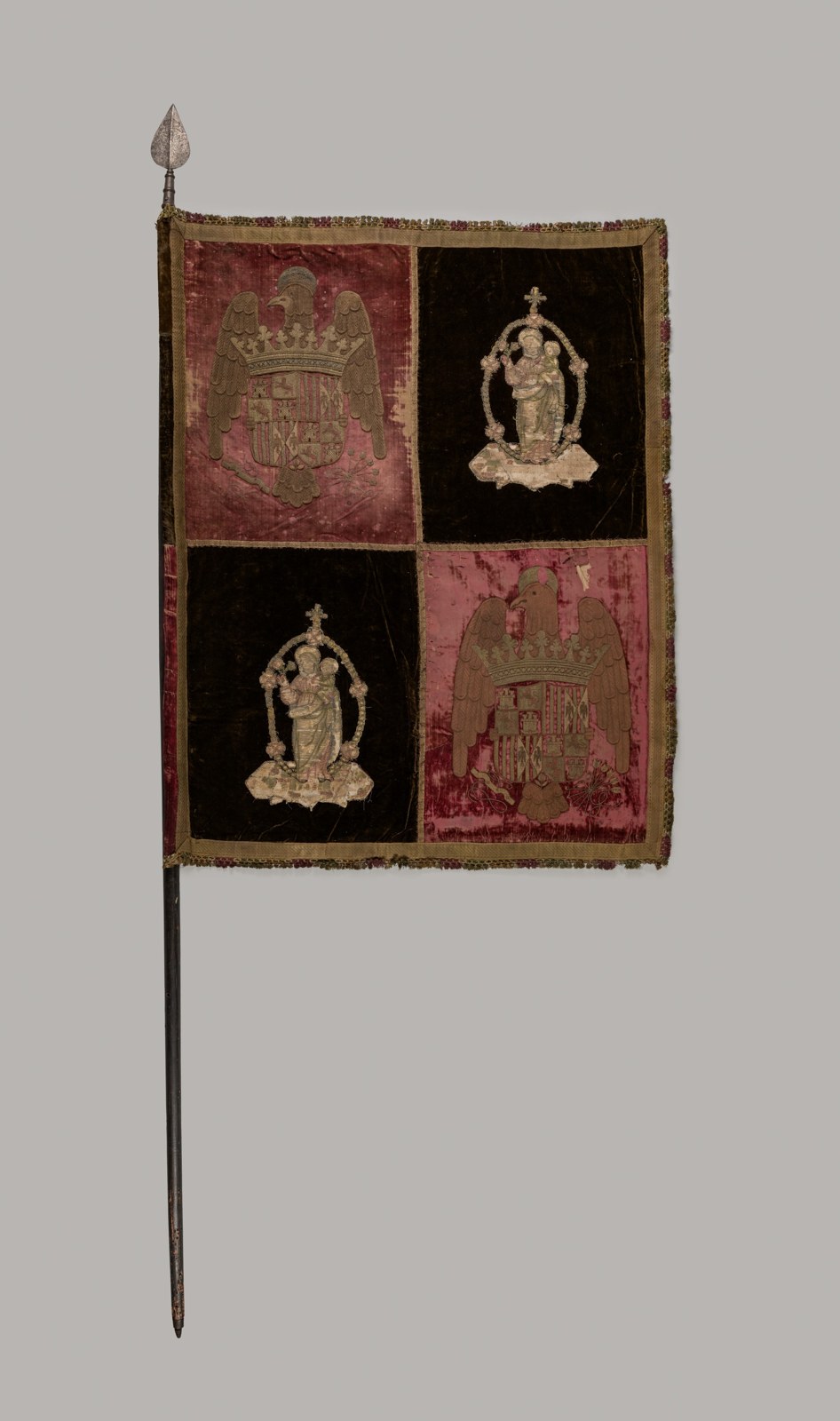
Four large textile compartments alternate two armorial displays with two images of a mother and child. Fringe outlines the rectangular fabric, which hangs from a long pole.

Gift of Mr. and Mrs. John L. Severance · CC0. Resized without cropping or recolouring.

Spain · 1500s

Royal arms beside the Madonna

A Spanish banner alternates royal and devotional imagery, making two systems of representation share one fabric.

Cleveland Museum of Art
Accession 1916.1885

Open the object study ↗
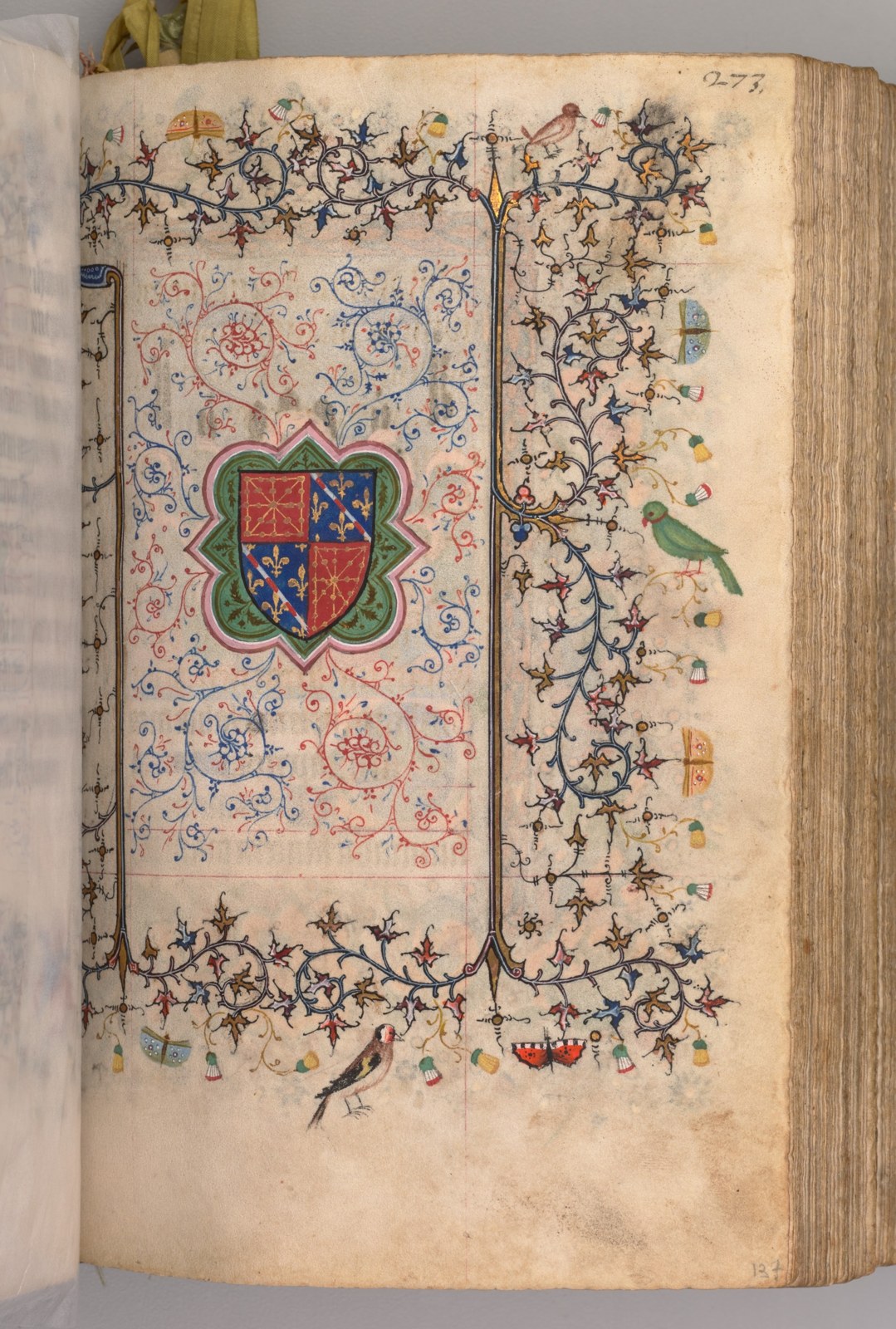
A small red-and-blue armorial shield sits inside a lobed frame, surrounded by fine vines, birds, and coloured ornament. It occupies a complete manuscript leaf rather than an isolated register entry.

Mr. and Mrs. William H. Marlatt Fund · CC0. Resized without cropping or recolouring.

France, Paris · c. 1405

A royal identity inside a prayer book

Charles of Navarre’s arms occupy a decorated leaf, while the manuscript’s commission and acquisition remain separate questions.

Cleveland Museum of Art
Accession 1964.40.137.a

Open the object study ↗
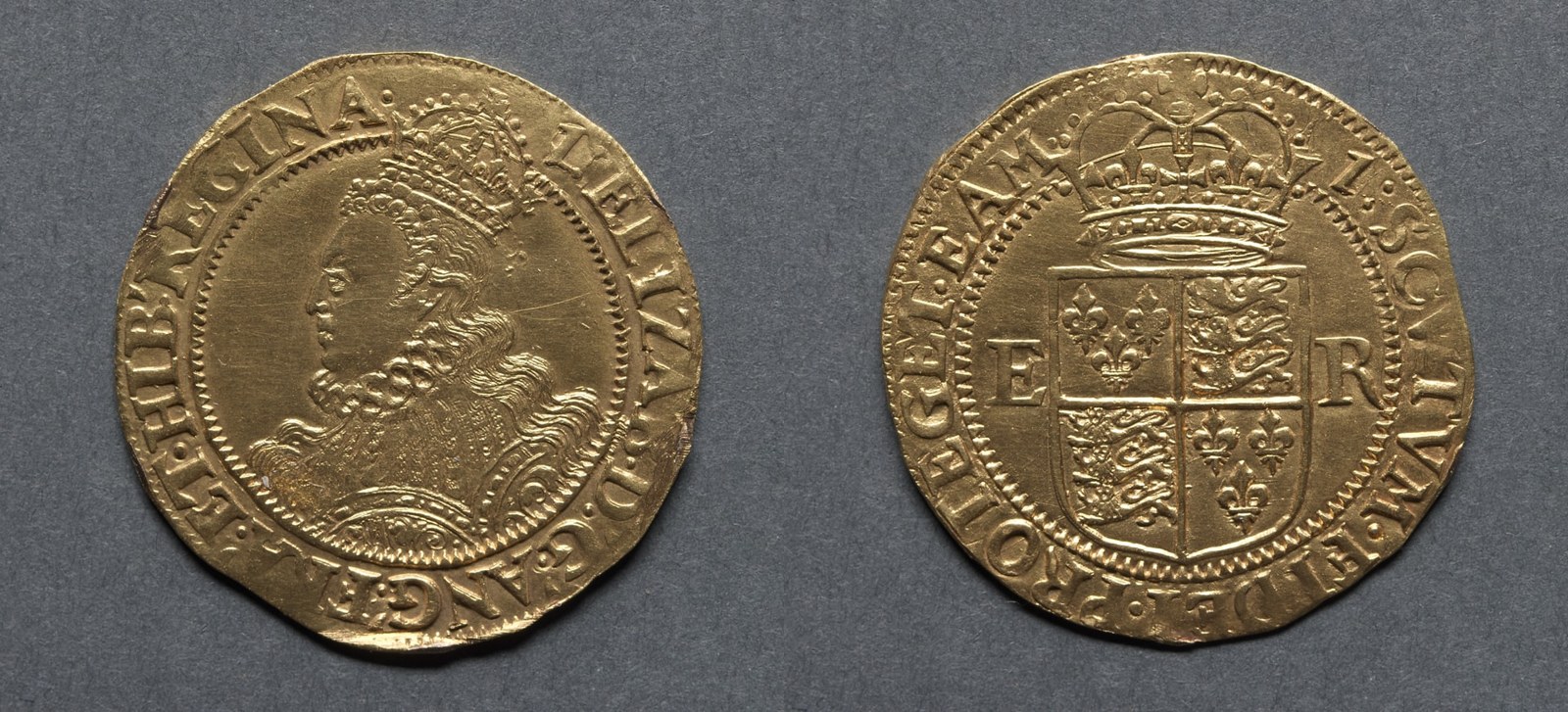
Two faces of a gold coin are reproduced together. A crowned portrait occupies one; a crowned, quartered shield and surrounding letters occupy the other.

The Norweb Collection · CC0. Resized without cropping or recolouring.

England, Elizabeth I, 1558-1603 · 1601

A royal claim small enough to spend

Elizabeth I’s coin places a crowned armorial shield opposite her portrait, while the claim to France exceeds possession.

Cleveland Museum of Art
Accession 1969.186

Open the object study ↗
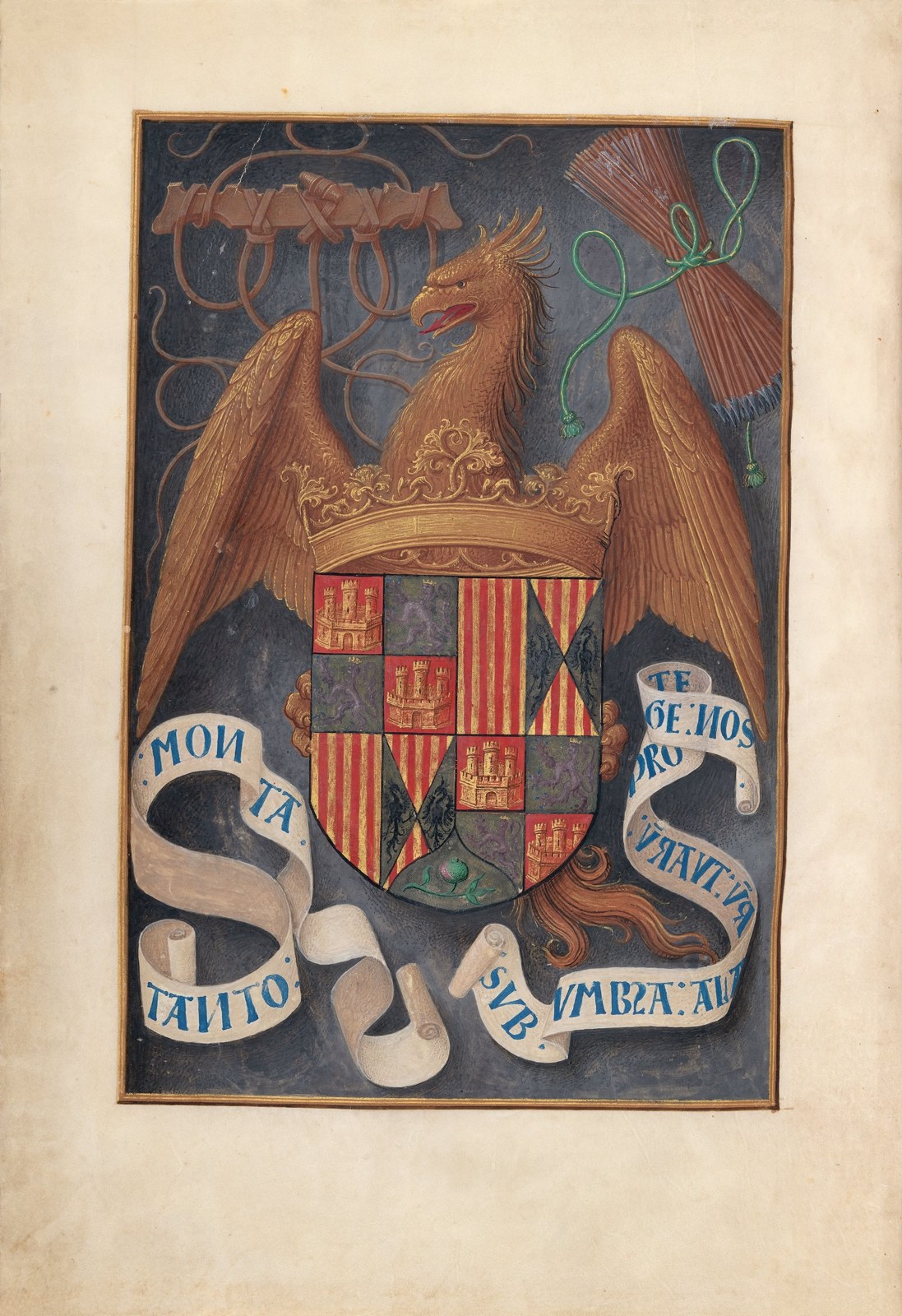
A spread-winged eagle carries a large crowned shield. A yoke and bundle of arrows flank the upper composition, and a lettered scroll extends beneath it.

Leonard C. Hanna Jr. Fund · CC0. Resized without cropping or recolouring.

Flanders, Ghent and Bruges, late 15th century · c. 1500

The arms at the front of the prayers

A Flemish manuscript presents Isabella’s royal devices, while its possible diplomatic gift history remains qualified.

Cleveland Museum of Art
Accession 1963.256.1.b

Open the object study ↗
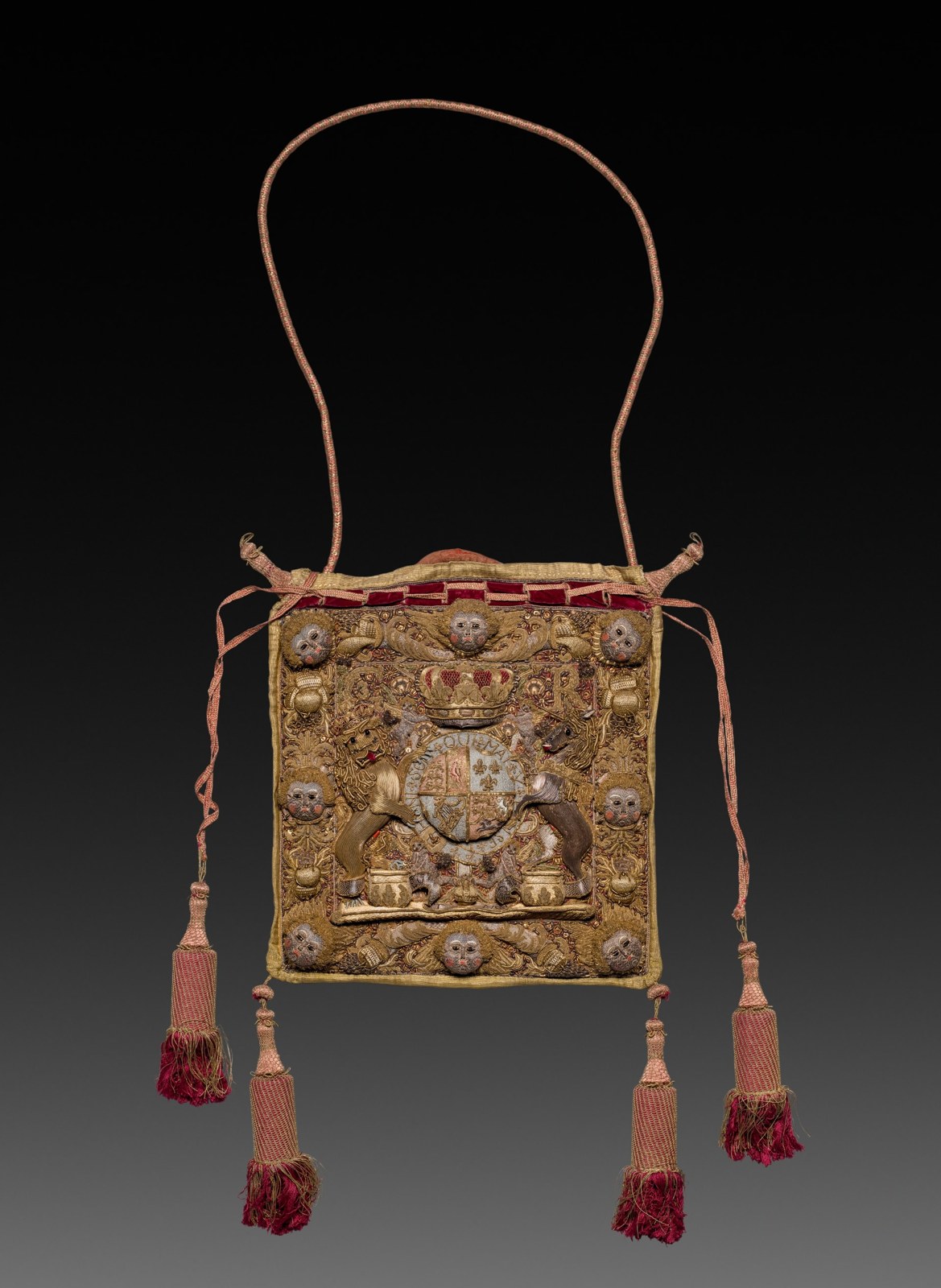
A small decorated purse hangs from cords and long tassels. Its front is densely worked with a crowned achievement, flanking animals, letters, and raised ornamental elements.

Gift of Mr. and Mrs. J. H. Wade · CC0. Resized without cropping or recolouring.

England, 18th century · 1760–1801

Authority wrapped in velvet

An embroidered purse for the Great Seal makes official custody visible through royal arms and a cypher.

Cleveland Museum of Art
Accession 1916.1366

Open the object study ↗
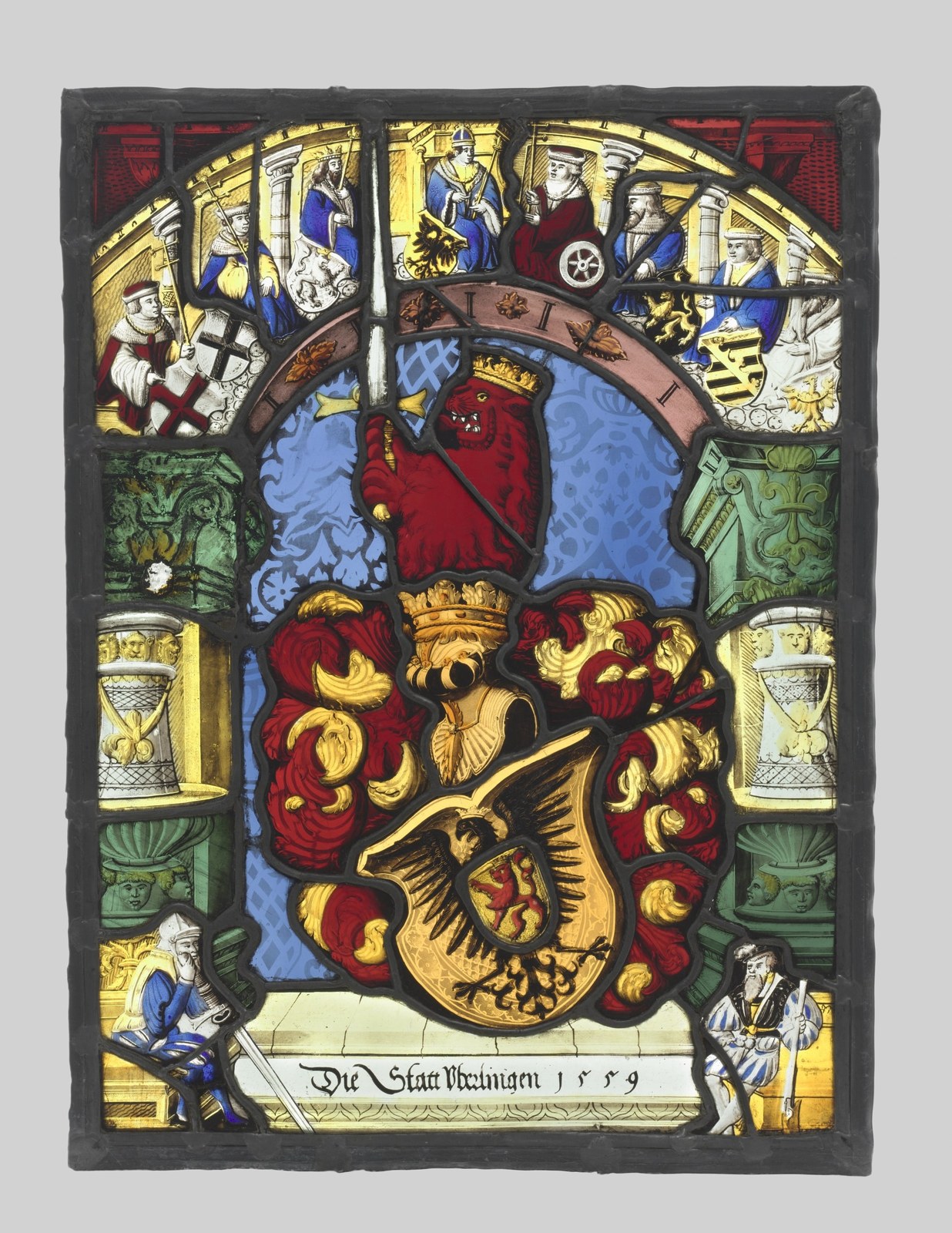
A large yellow shield with a dark eagle occupies the lower centre beneath a helmet and curling ornament. A red lion with a sword appears above, framed by columns and a populated arch.

Gift of William G. Mather · CC0. Resized without cropping or recolouring.

Switzerland · 1559

A city’s arms made somewhere else

A Swiss-catalogued glass panel named for Überlingen warns against equating represented identity with place of manufacture.

Cleveland Museum of Art
Accession 1953.283

Open the object study ↗
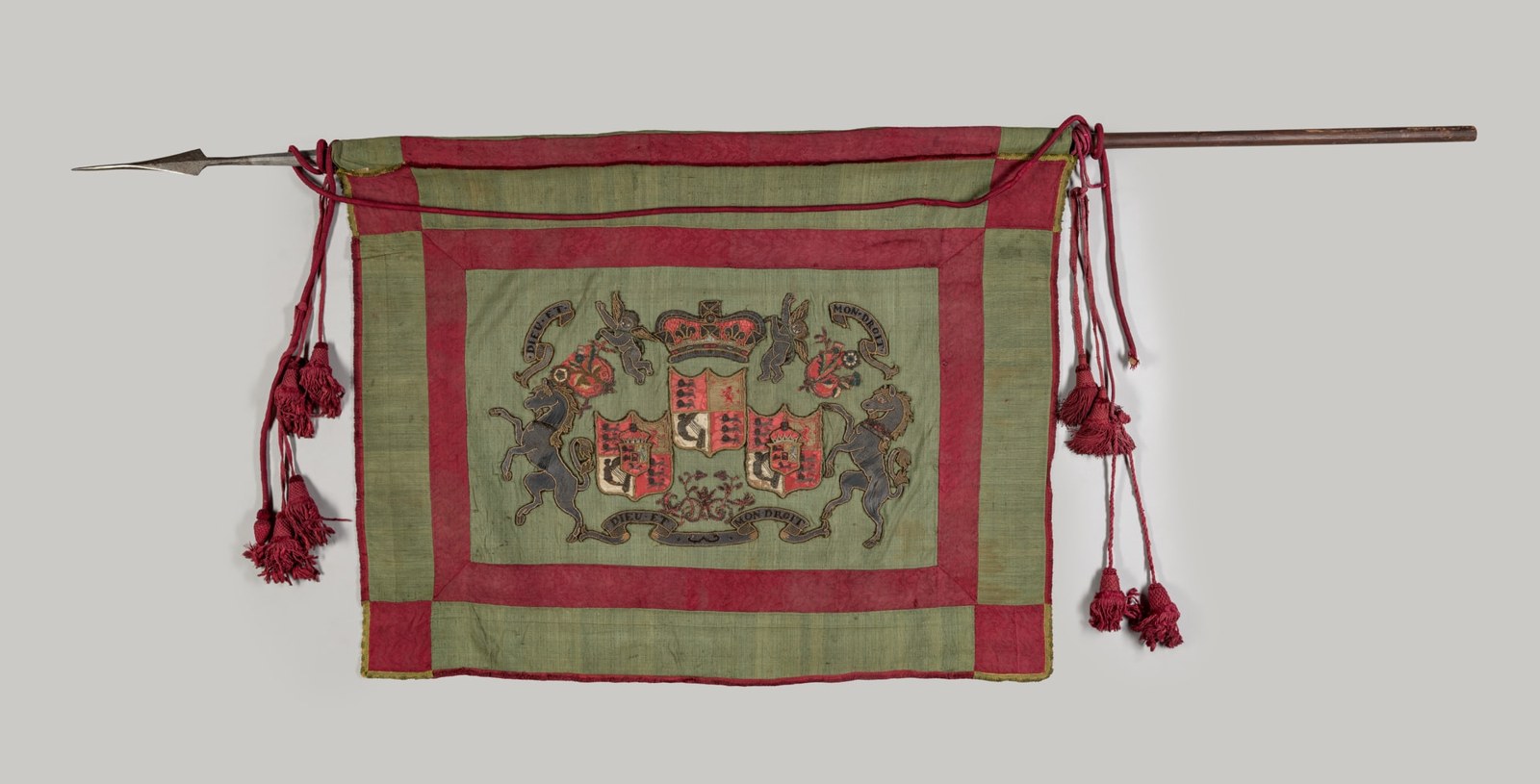
A green rectangular textile with a broad red border hangs from a pole. An embroidered achievement occupies the centre, with flanking figures and scrolling elements around the shield.

Gift of Mr. and Mrs. John L. Severance · CC0. Resized without cropping or recolouring.

Great Britain, probably England, 18th century · 1700s

An achievement carried by silk

A royal banner displays a whole achievement on a coloured ground, rather than simply filling the cloth with a shield’s field.

Cleveland Museum of Art
Accession 1916.1548

Open the object study ↗
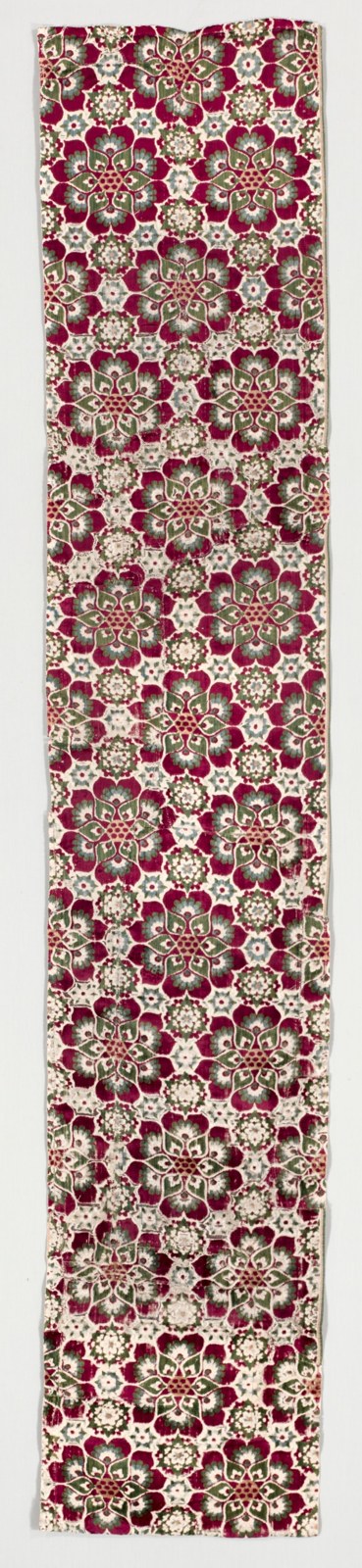
A long, narrow textile fragment repeats large red-and-green rosettes against a pale ground. Small groups of round forms sit inside the repeated centres.

Purchase from the J. H. Wade Fund · CC0. Resized without cropping or recolouring.

Italy, Florence · 1450–1500

A coat of arms becomes a repeat

Medici devices sit inside a repeating velvet pattern, where heraldry works at the scale of woven cloth.

Cleveland Museum of Art
Accession 1943.67

Open the object study ↗
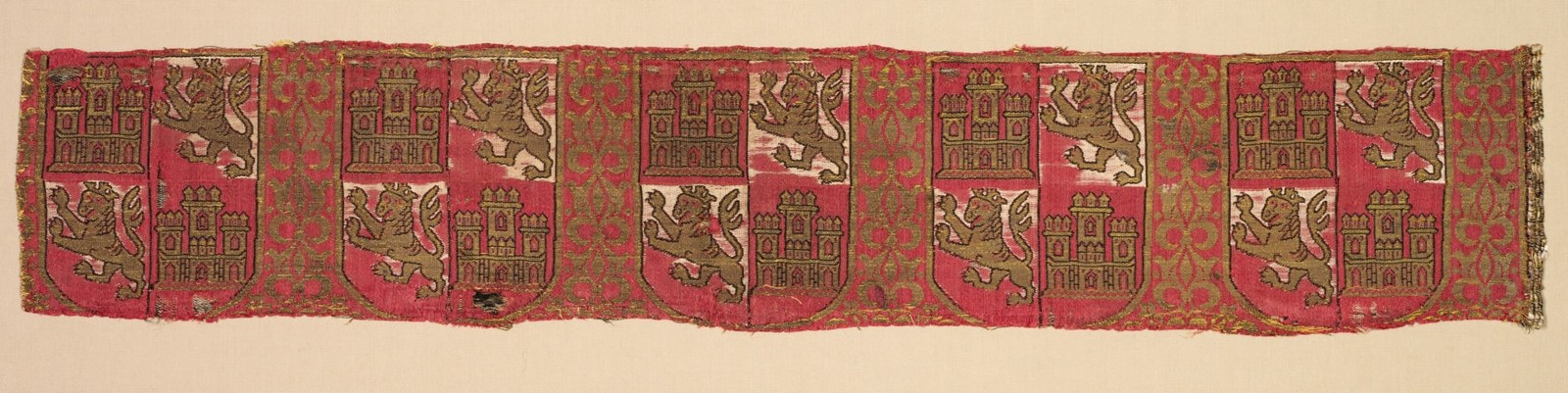
A narrow strip repeats small quartered shields between ornamental bands. Castles and upright animals alternate within each armorial field.

Purchase from the J. H. Wade Fund · CC0. Resized without cropping or recolouring.

Spain, Granada, Nasrid period · 1200–1325

Christian royal arms, Nasrid cloth

A textile catalogued to Granada joins Castilian and Leonese heraldry with the question of who made cloth for whom.

Cleveland Museum of Art
Accession 1939.48

Open the object study ↗
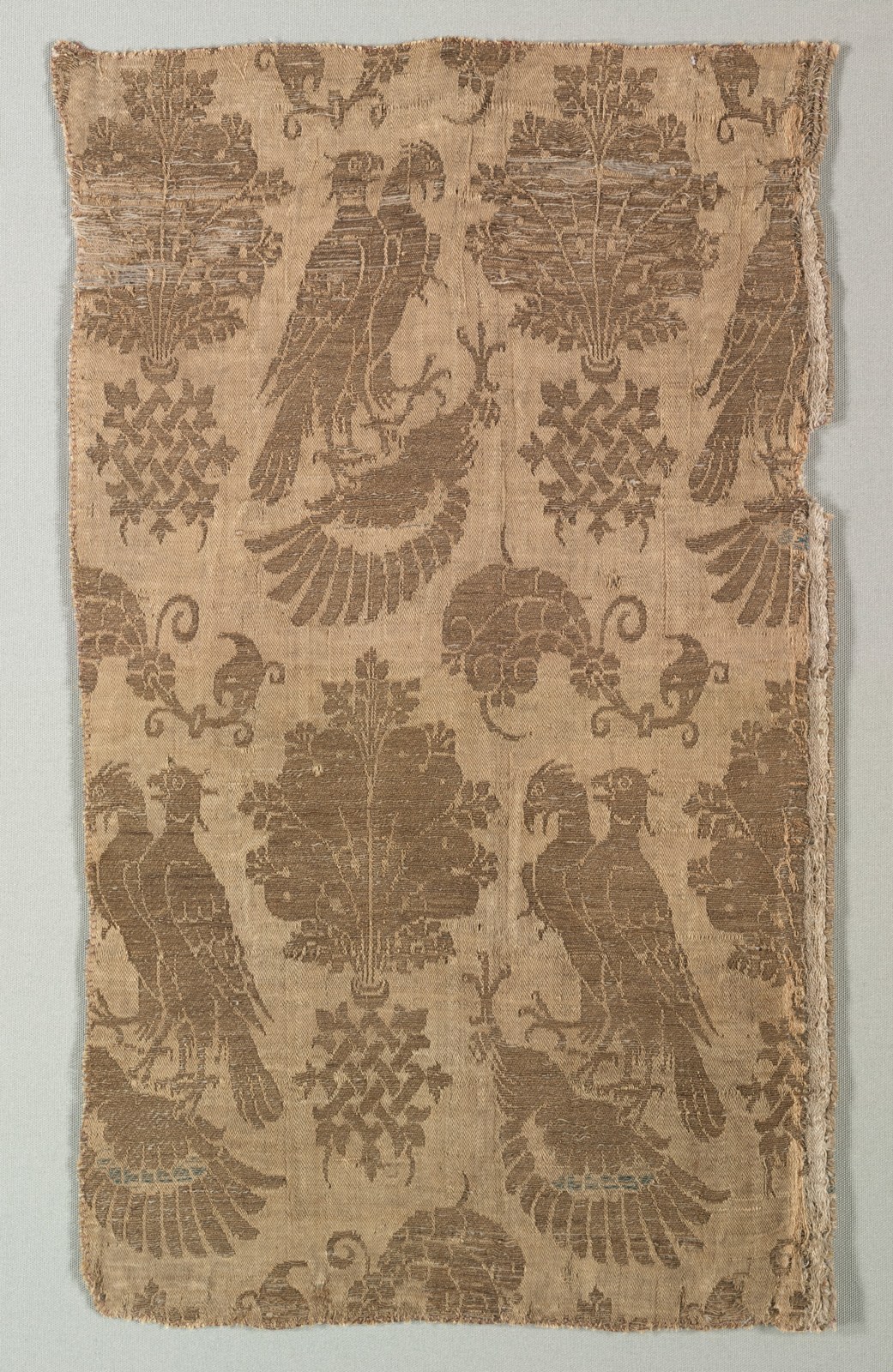
Large paired bird forms alternate with upright plumes and curling ornaments in a gold-patterned fabric. The design repeats across the surviving textile.

Purchase from the J. H. Wade Fund · CC0. Resized without cropping or recolouring.

Italy, last third of 14th century · 1360–1400

Heraldic vocabulary outside a shield

Falcons, wings, claws, and plumes form an Italian silk pattern whose relationship to a named bearer remains open.

Cleveland Museum of Art
Accession 1943.283

Open the object study ↗
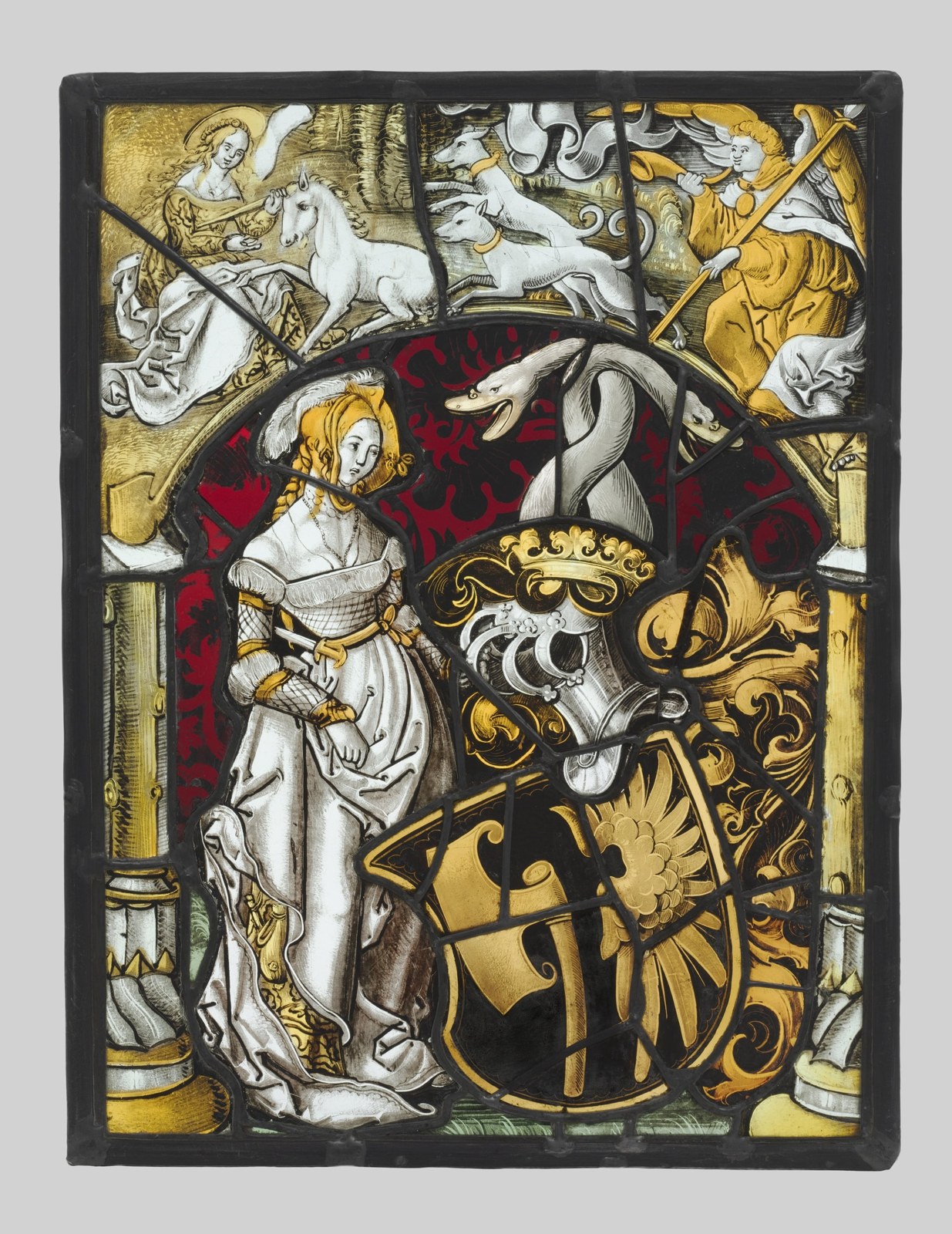
A shield and helmet occupy the lower portion beside human figures. An upper scene includes a unicorn, a seated woman, hounds, and a winged figure.

Purchase from the J. H. Wade Fund · CC0. Resized without cropping or recolouring.

Germany or Switzerland, 16th century · c. 1515

A unicorn hunt above the arms

A glass panel puts a Lichtenfels achievement beneath a religious scene, inviting two distinct readings of the same animals.

Cleveland Museum of Art
Accession 1954.149

Open the object study ↗
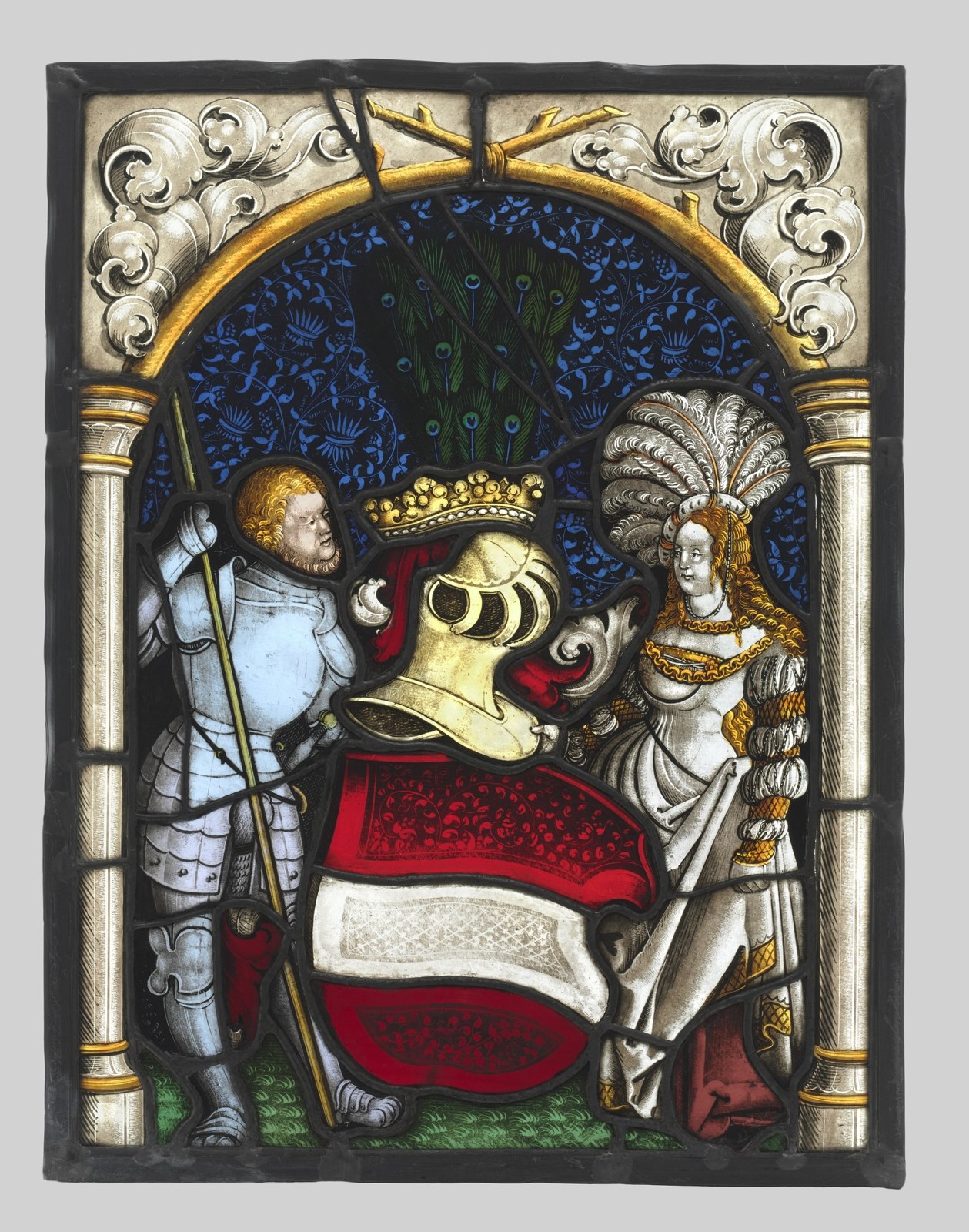
A red shield with a broad pale horizontal band stands between an armoured man and a richly dressed woman. A helmet and large feather-like ornament rise above the field.

Purchase from the J. H. Wade Fund · CC0. Resized without cropping or recolouring.

Switzerland, Germany, or Austria, 16th century · c. 1515

The figures beside the Austrian shield

An armoured figure and elaborately dressed companion flank Austrian arms without identifying a particular couple.

Cleveland Museum of Art
Accession 1955.72

Open the object study ↗
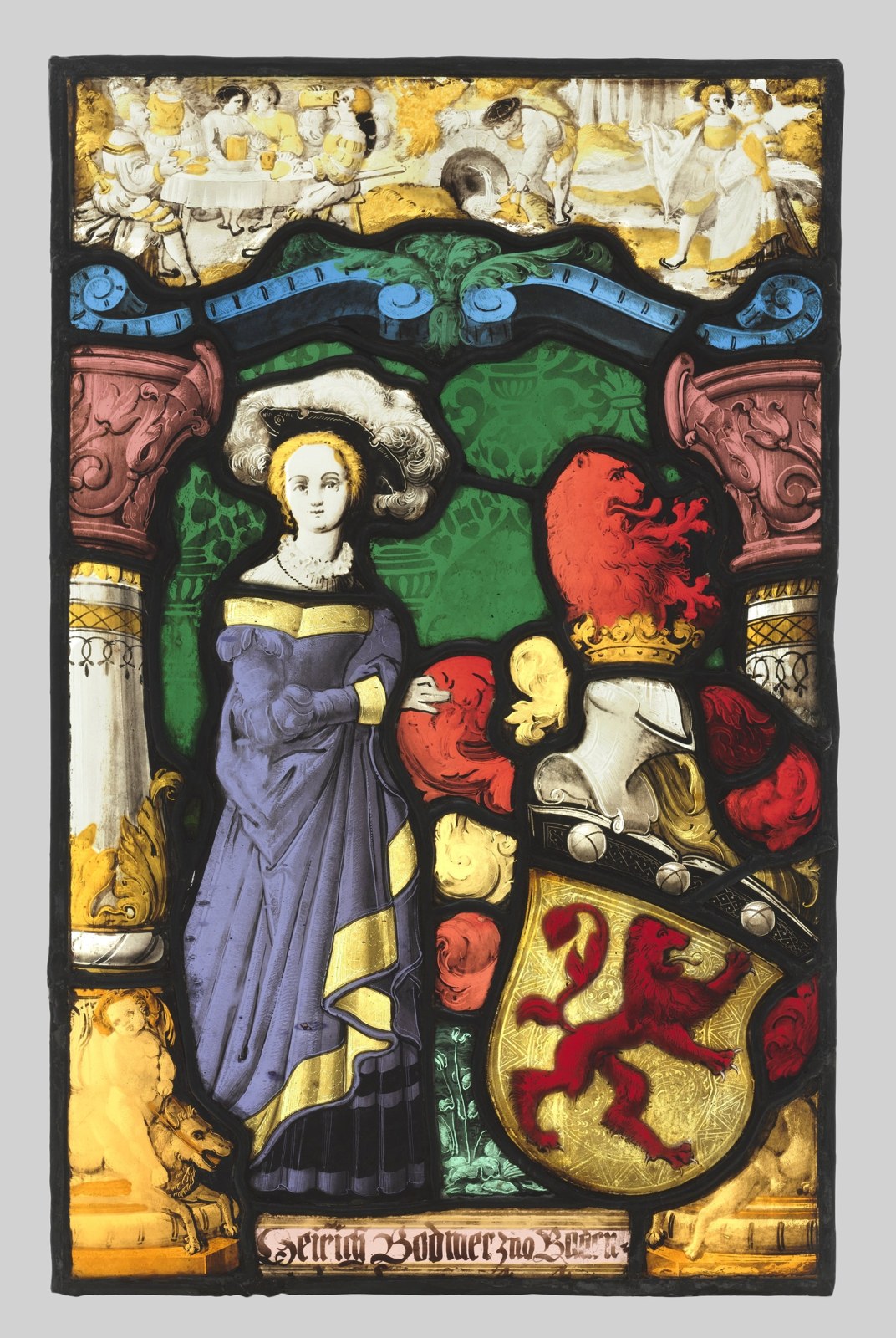
A large animal-bearing shield and helmet stand beside a woman in a long gown and elaborate hat. Smaller scenes occupy the top and lower border.

Purchase from the J. H. Wade Fund · CC0. Resized without cropping or recolouring.

Switzerland, Baden, 16th century · c. 1530

A named achievement in a busy window

Heinrich Bodmer’s named arms share a panel with a richly dressed figure and scenes above and below.

Cleveland Museum of Art
Accession 1954.150

Open the object study ↗
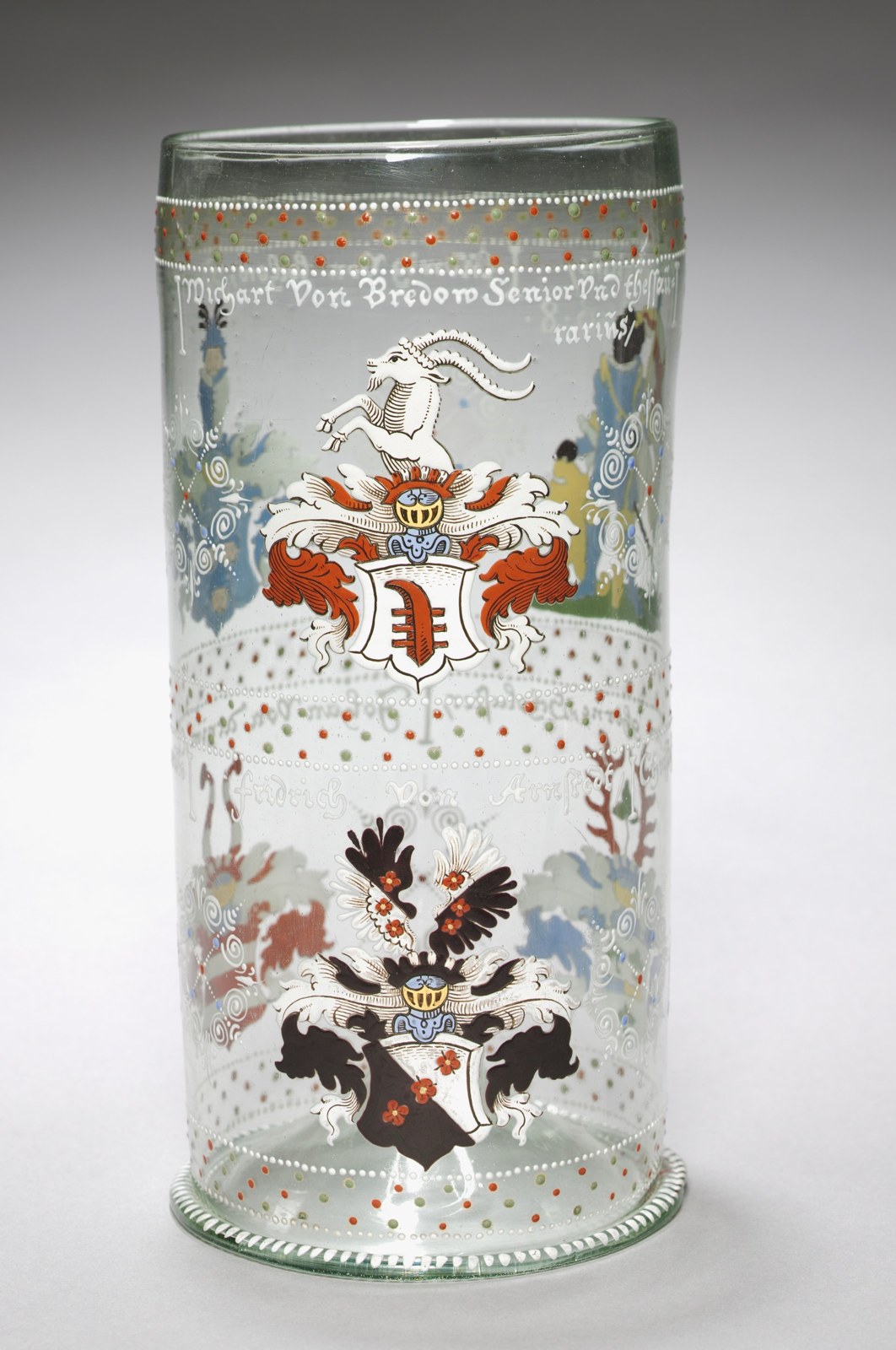
A tall cylindrical beaker carries enameled achievements, lettering, dotted bands, and figures. The curved glass turns part of the display away from the camera.

Gift of Mrs. Henry White Cannon · CC0. Resized without cropping or recolouring.

Germany, probably Bohemia, 16th century · 1568

A chapter of names around a glass

An enamelled beaker records several achievements and names on a curved surface associated with Magdeburg Cathedral.

Cleveland Museum of Art
Accession 1948.232

Open the object study ↗
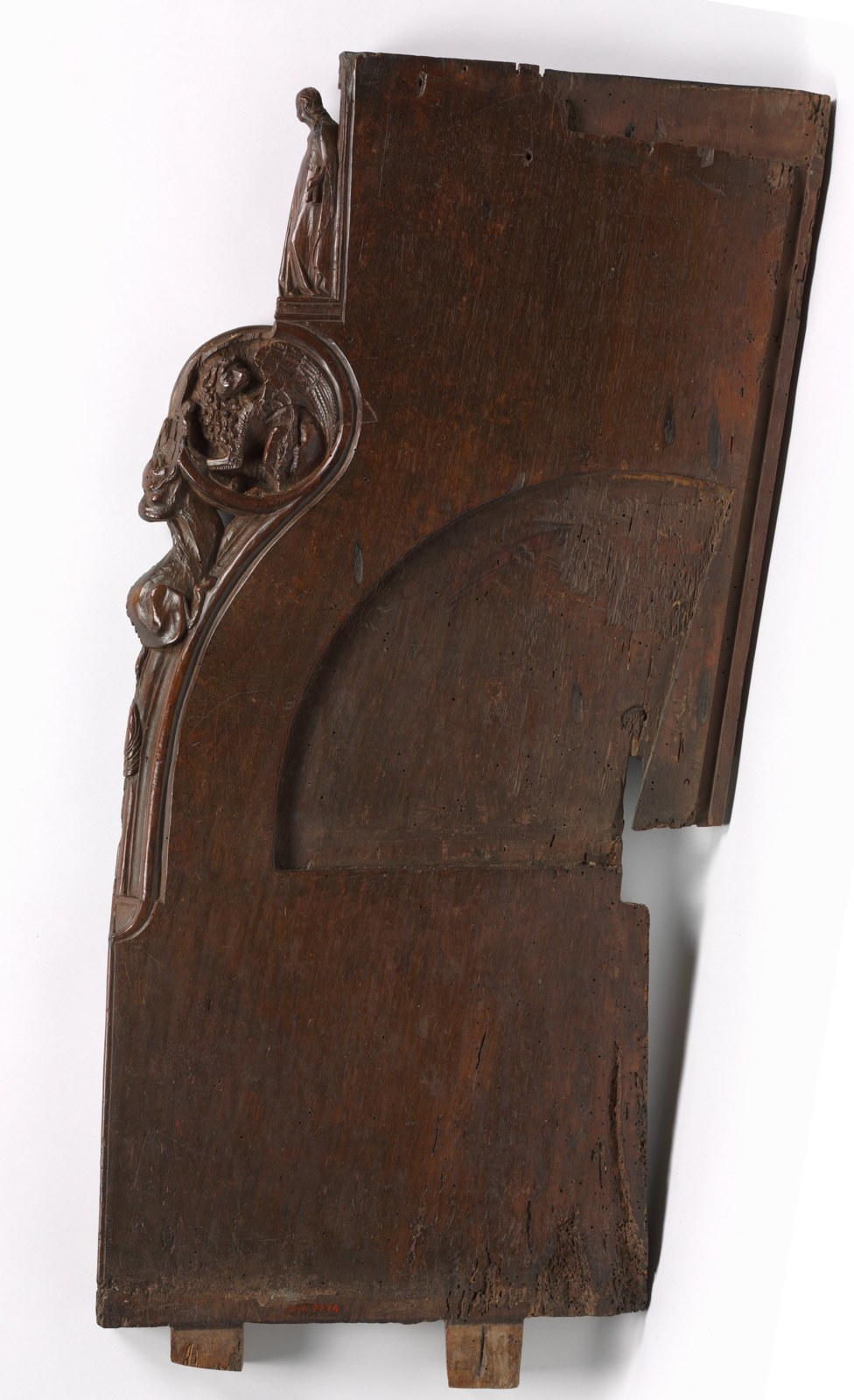
A dark wooden panel has an irregular curved profile and projecting joints. Carved figures and animal-like forms occupy part of the edge, while much of the broad face remains plain.

John L. Severance Fund · CC0. Resized without cropping or recolouring.

Spain, Catalonia, Monastery of Pedralbes, 14th century · c. 1330–1340

A carved beast is not always an armorial charge

A fragment from a Catalan choir stall invites comparison between sacred imagery, heraldic vocabulary, and furniture construction.

Comparative sacred imagery; no personal arms identified

Cleveland Museum of Art
Accession 1977.74

Open the object study ↗
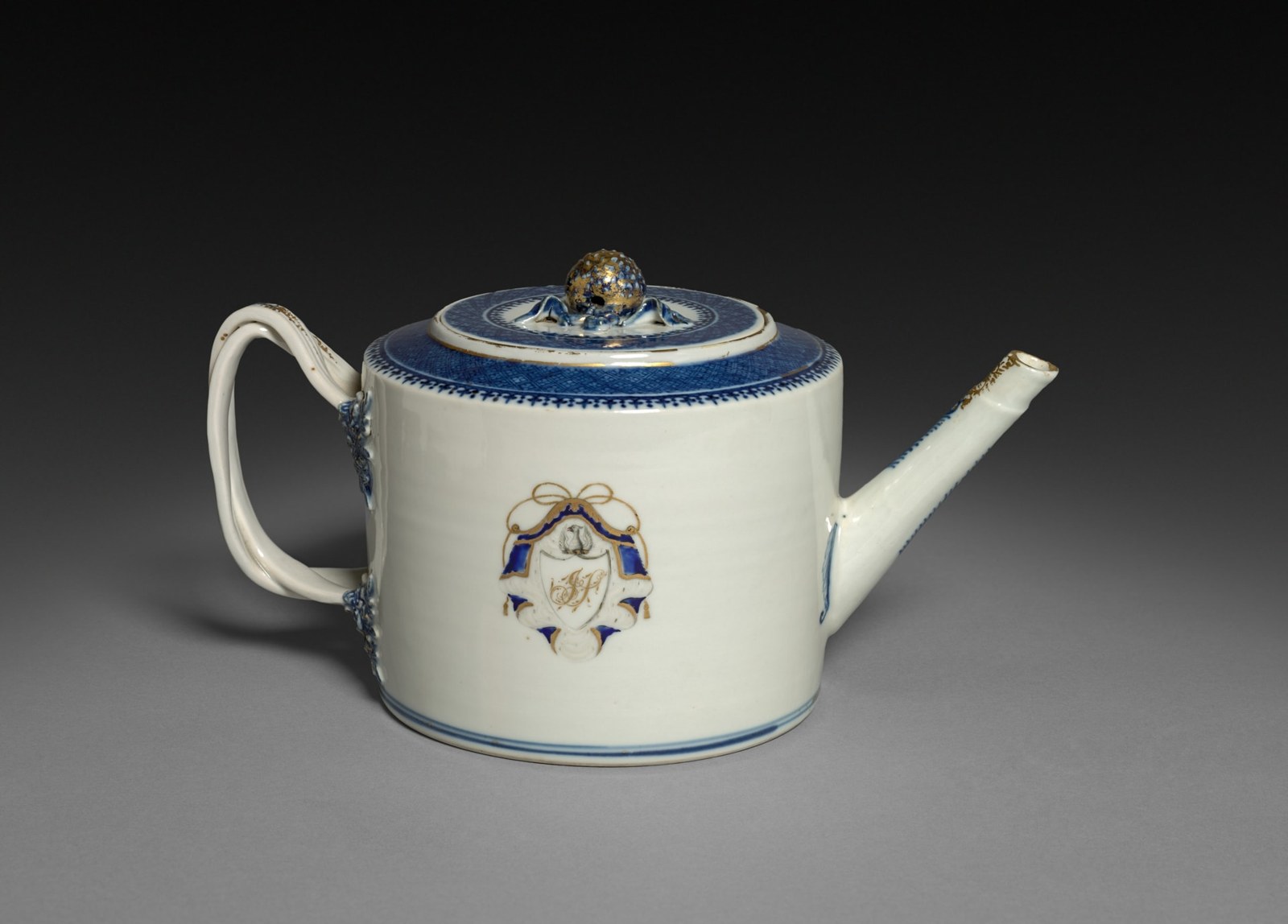
A cylindrical white teapot carries a blue-and-gold shield-shaped cartouche containing intertwined letters. A small ornament sits above, while blue patterns encircle the lid and upper body.

Gift of Mr. and Mrs. Robert Hays Gries · CC0. Resized without cropping or recolouring.

China, Chinese Export -- English or American Markets, 18th century · c. 1775–1800

A shield shape around somebody’s initials

Chinese export porcelain uses armorial-style framing for a monogram, showing why a shield outline alone does not establish arms.

Monogram in armorial-style framing; bearer not identified

Cleveland Museum of Art
Accession 1958.212

Open the object study ↗
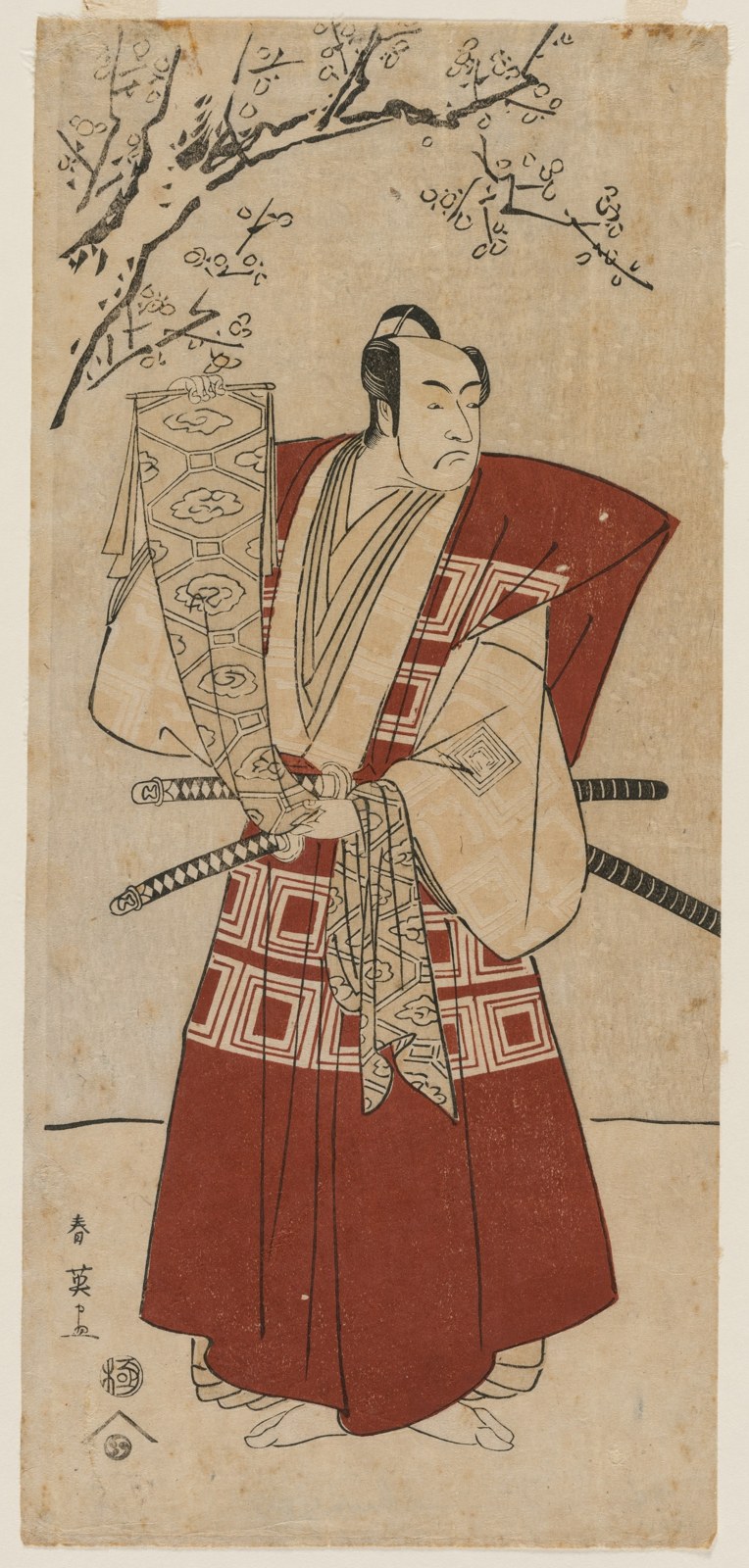
A figure in broad red clothing holds a long banner and wears swords. Repeated angular devices decorate the garment, while lettering and seals occupy part of the sheet.

Gift of Jeptha H. Wade in honor of Emily V. Wade · CC0. Resized without cropping or recolouring.

Japan, Edo period (1615–1868) · 1791

An actor, a costume, a banner

A Japanese theatre print makes identity visible through costume and a carried banner, without becoming a record of an actual military lord.

Comparative Japanese performance emblems

Cleveland Museum of Art
Accession 1974.81

Open the object study ↗
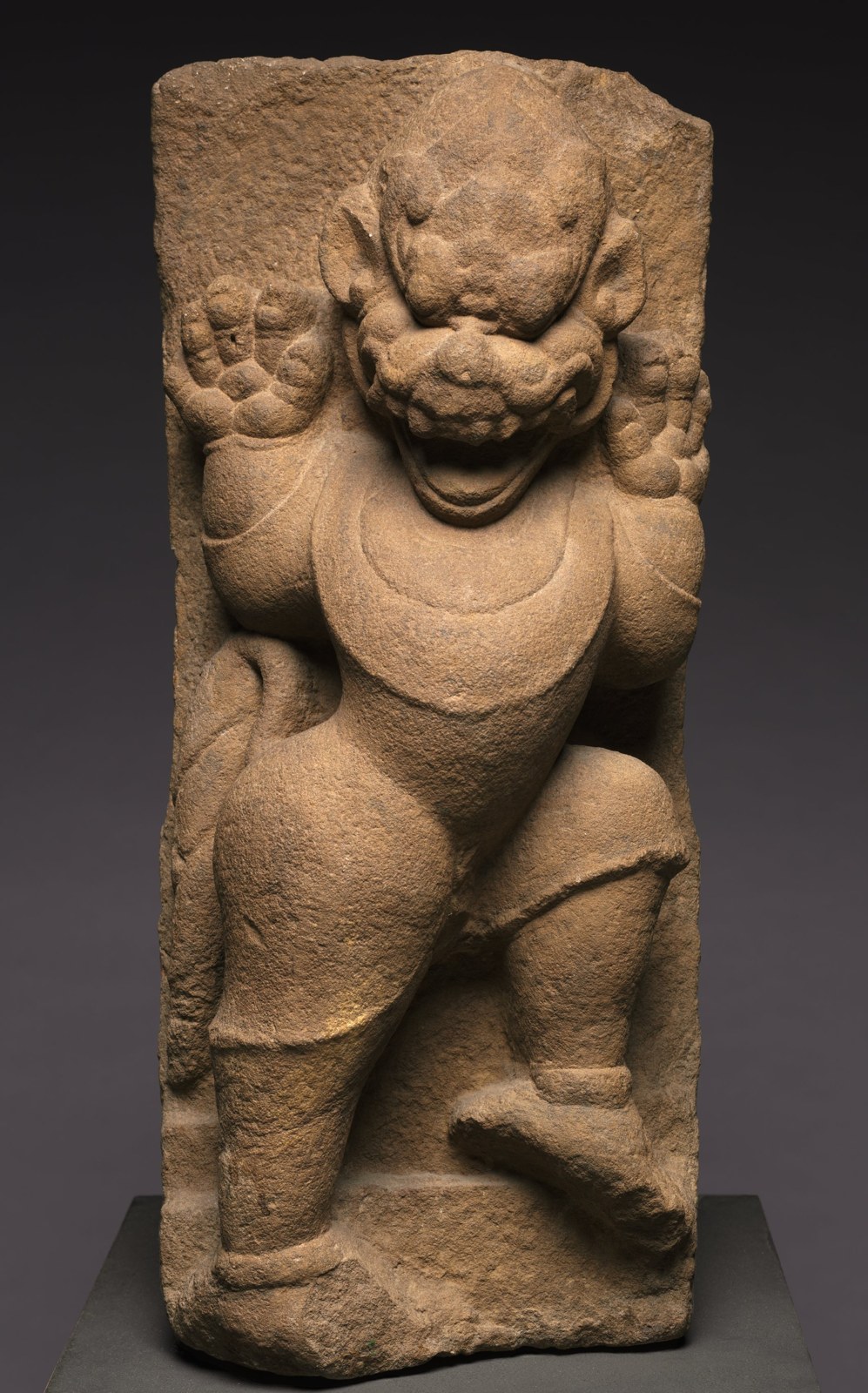
A sandstone lion-like figure rises with lifted forelimbs, prominent eyes, an open mouth, and a heavy chest ornament. Its surviving stone surface is worn and uneven.

Leonard C. Hanna Jr. Fund · CC0. Resized without cropping or recolouring.

Vietnam (Champa) · 900s

The catalogue says heraldic. Does that mean arms?

A Cham sandstone lion challenges a European reading of the word heraldic in a much older Southeast Asian religious setting.

Comparative emblematic sculpture; no coat of arms identified

Cleveland Museum of Art
Accession 1982.146

Open the object study ↗
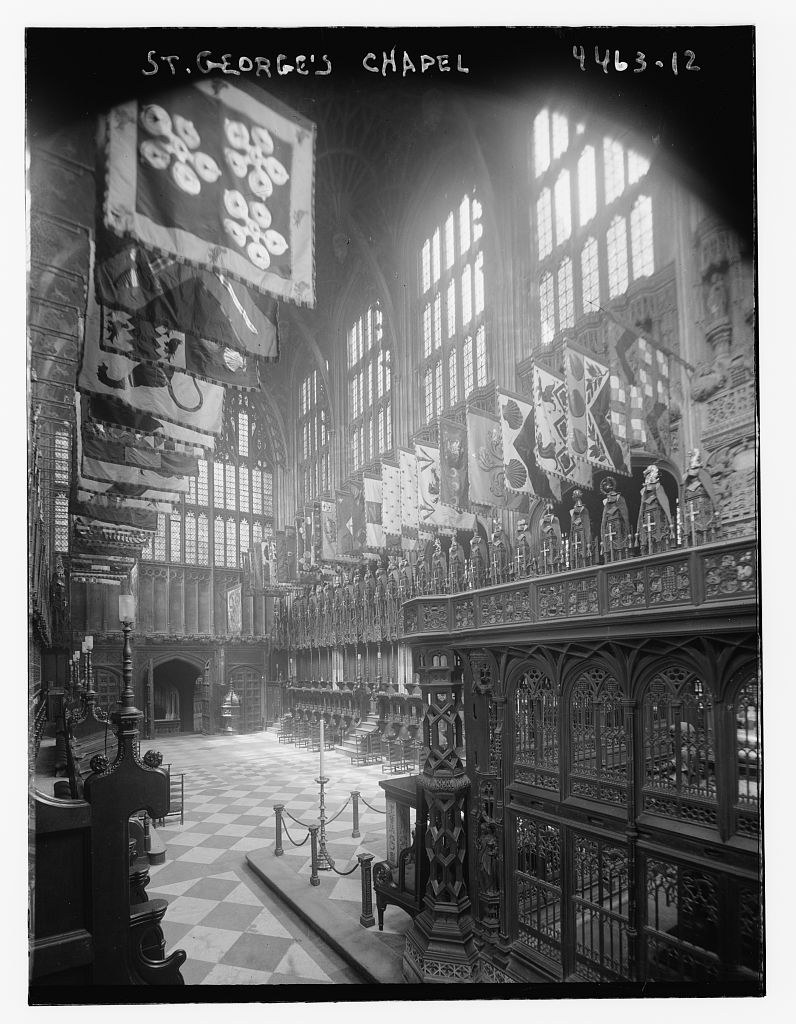
Rows of banners hang over carved stalls. Helms and crest-like ornaments stand along the canopies, while small rectangular plates cover parts of the woodwork below.

Bain News Service / Library of Congress · Public domain. Resized without cropping or recolouring.

British · Windsor · Photograph: ca. 1915–1920

The banners that leave. The plates that stay.

An early twentieth-century photograph shows banners above stalls that also retain plates. The display combines changing membership with a lasting record of earlier holders.

Dated photographic witness to a changing Garter display

Library of Congress / St George’s Chapel
Photograph identifiers LC-B2-4463-12; digital ID ggbain.26050

Open the object study ↗
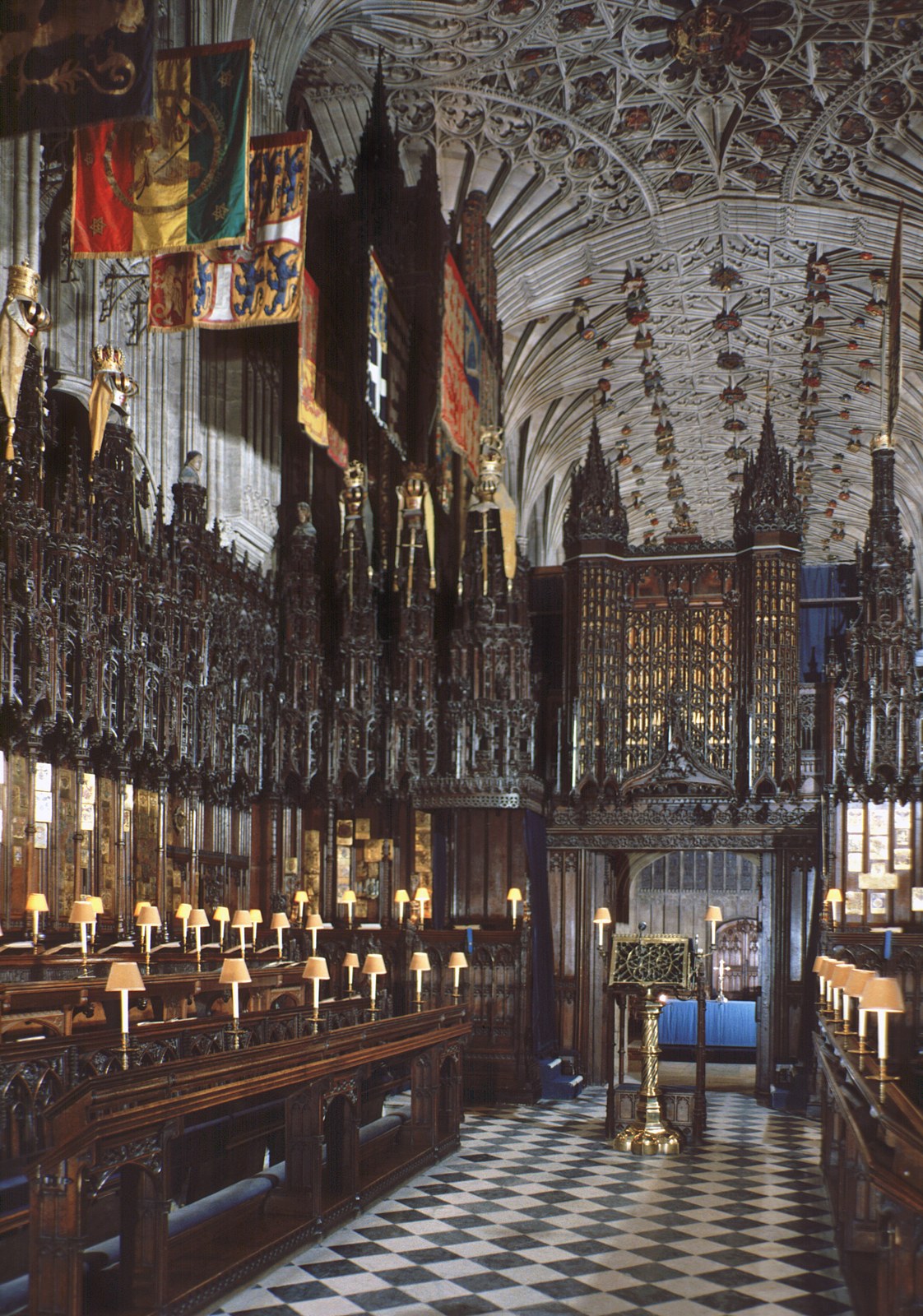
Large coloured banners occupy the upper left, with helms and ornaments over the stalls. Shields also appear within the patterned vault, while lamps, seats, and a patterned floor organize the occupied room.

Photo by Serendigity · Public domain. Resized without cropping or recolouring.

British · Windsor · Photograph: 21 September 1983

A living order inside an old chapel

A photograph from 1983 records the Garter banners in an older chapel. The architecture, individual displays, and photographed arrangement have different histories.

Modern photographic witness; arrangement shown is from 1983

St George’s Chapel, Windsor / Wikimedia Commons
Photograph identifier Flickr photograph 41181845160

Open the object study ↗
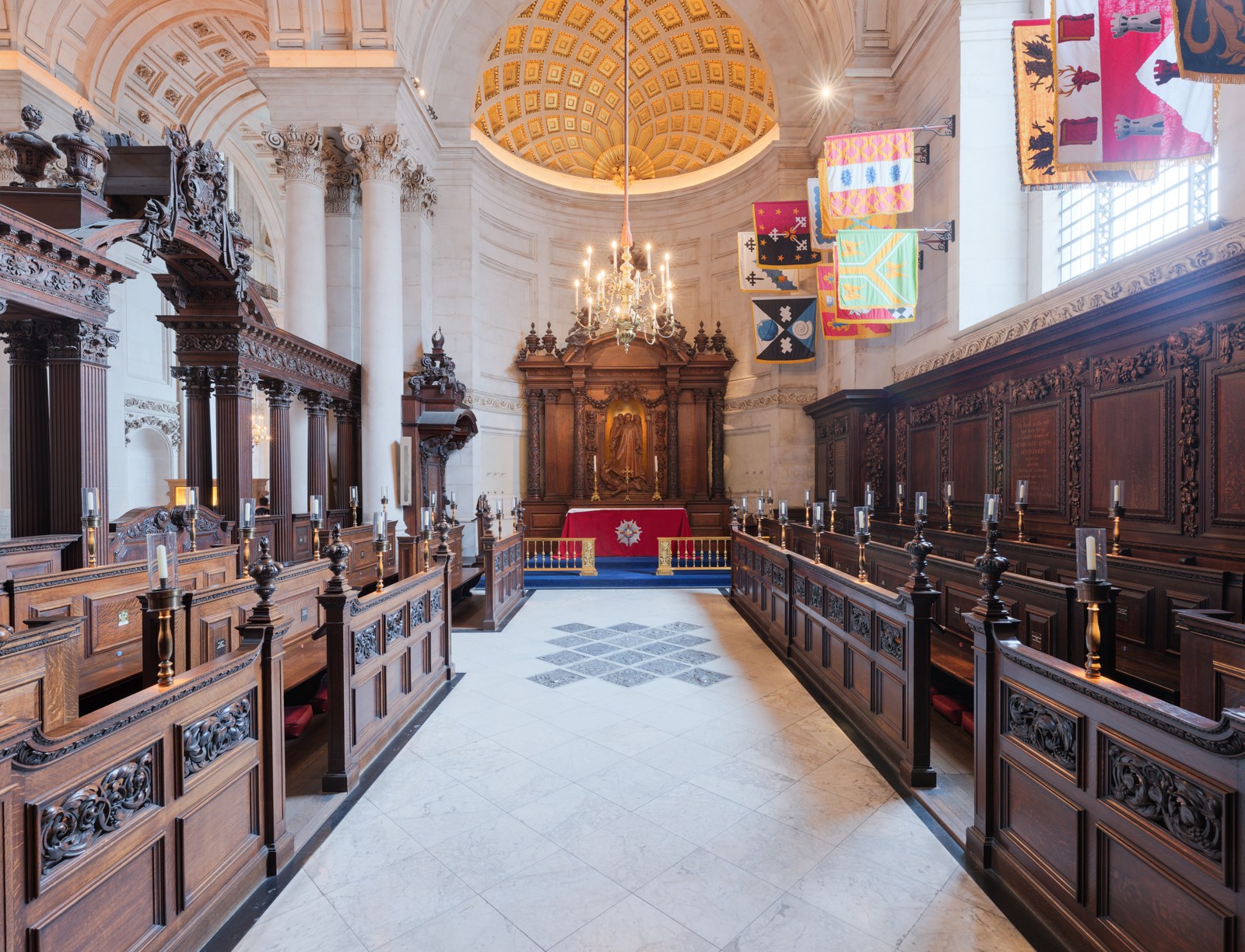
Coloured rectangular banners hang over the stalls on the right of a bright chapel. Carved wooden seats and wall panels face one another across an aisle leading to an altar.

Photo by DAVID ILIFF · CC BY-SA 3.0. Resized without cropping or recolouring.

British · London · Photograph: 30 May 2014

Another order. Another room of arms.

A 2014 photograph records banners at St Paul’s. Comparing them with Windsor requires the membership and display practices of the correct order.

Modern armorial display photographed in 2014; not the Garter chapel

St Paul’s Cathedral / Wikimedia Commons
Photograph identifier Wikimedia Commons file 33156317

Open the object study ↗
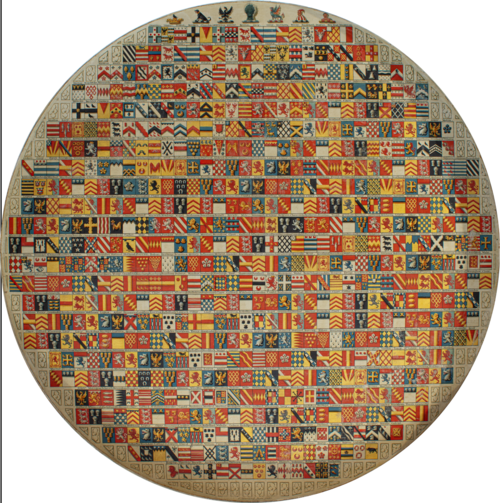
A circular painted field is packed with small rectangular armorial compartments. Their rows shorten toward the curved edge, while red, blue, gold, and white recur across different geometrical and figural designs.

P Sonnard (catalogue attribution); digital reproduction via Wikimedia Commons · Public domain. Resized without cropping or recolouring.

British · Stowe House · Painting: 1806; Photograph: undated reproduction

726 quarterings, one ceiling

The Stowe Armorial turns accumulated ancestry into an architectural spectacle. Its 726 quarterings invite a closer look at what marshalling can communicate, and what it takes to substantiate the relationships.

Early nineteenth-century genealogy displayed as architectural armory; not a medieval manuscript

Stowe House
Accession SS.51

Open the object study ↗
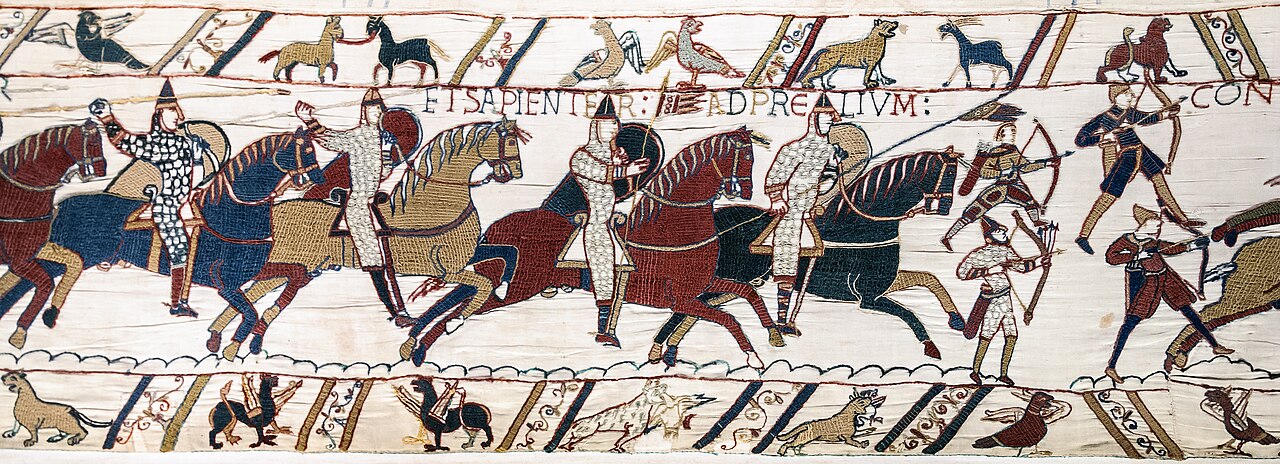
Mounted figures advance across the central strip beside archers on foot. Long shields, patterned clothing, horses, bows, and raised weapons distinguish bodies and actions. A line of lettering runs above them.

Myrabella / Wikimedia Commons / CC0 · Public domain. Resized without cropping or recolouring.

Anglo-Norman narrative; makers unrecorded · 11th century; Photograph: 7 March 2013

A battle before the armorial directory

An embroidered battle scene makes shields, bodies, weapons, and words work together. It offers a powerful comparison with later heraldry without turning every shield pattern into a hereditary coat of arms.

Eleventh-century embroidery photographed in 2013; comparison with the development of armory

Bayeux Museum / City of Bayeux
Photograph identifier Wikimedia Commons file 25450703

Open the object study ↗
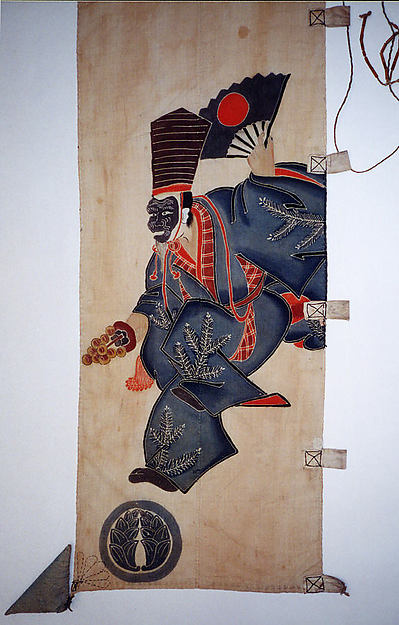
A masked figure in a dark robe steps across the light cloth, raising an open fan. Fine white lines articulate the robe and its plant designs; red accents sharpen the movement. A round dark device sits below the figure at the left.

Gift of John B. Elliott through the Mercer Trust, 1999 · CC0. Resized without cropping or recolouring.

Japan · Edo period · 1827

A dancer and a family device on one nobori

An 1827 Japanese banner combines a theatrical figure with a small family-associated device. The comparison asks which part identifies the motif, the occasion, and the people connected with the cloth.

Surviving nobori; photograph shows the decorated section, not the full length

The Metropolitan Museum of Art
Accession 1999.247.6

Open the object study ↗
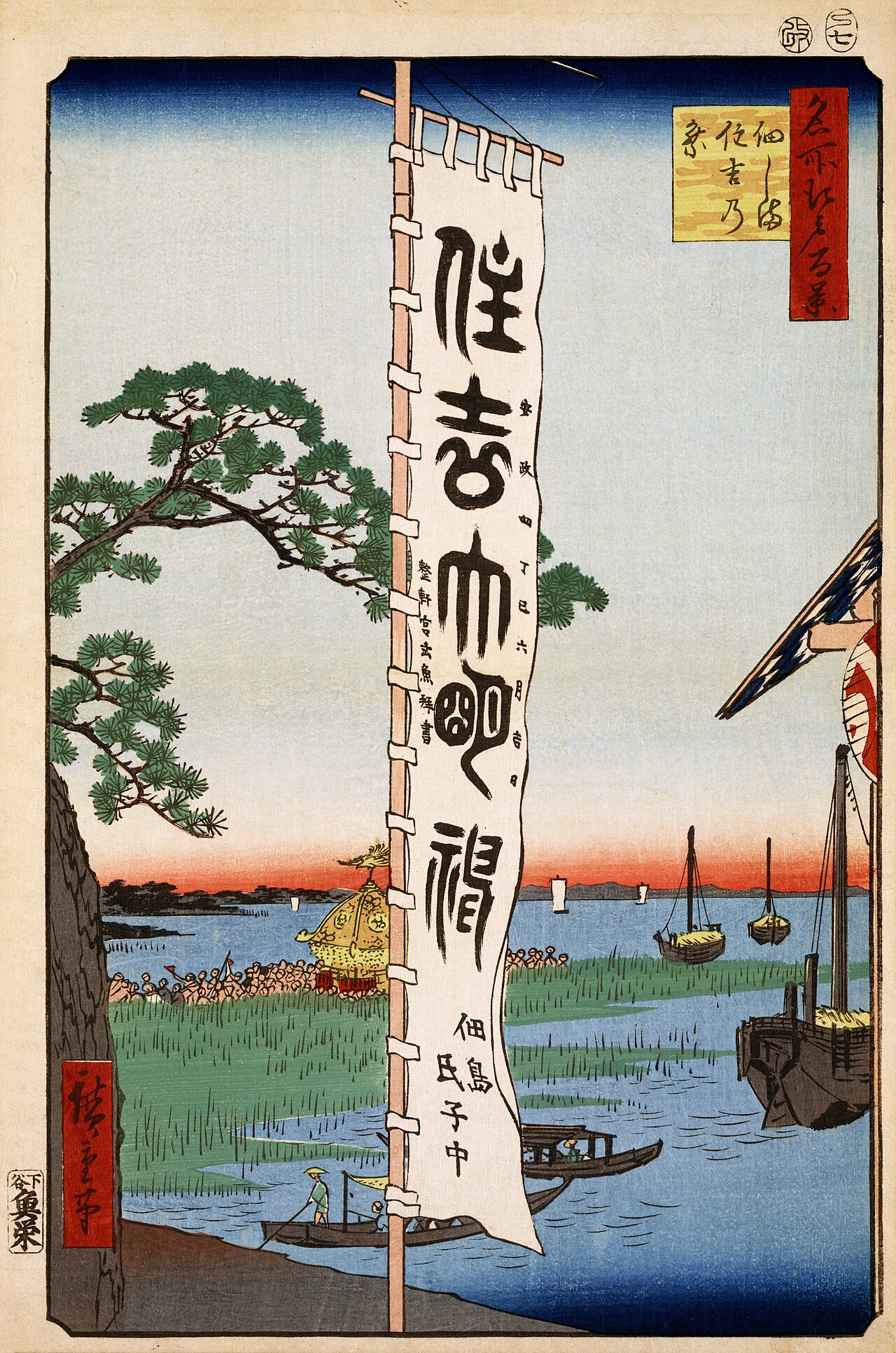
A very tall white banner bearing black characters divides the scene vertically. Repeated loops attach its left edge to an upright support, and a crosspiece holds its top. Its lower edge curves above the water.

Utagawa Hiroshige; Library of Congress reproduction via Wikimedia Commons · Public domain. Resized without cropping or recolouring.

Japan · Edo · Print: [1857]; Photograph: undated digital reproduction

A nobori large enough to organize the view

Hiroshige puts a giant festival banner in the foreground and a procession behind it. The print shows how a public sign can organize both a place and the picture made of it.

An artist’s depiction of festival nobori, not a surviving textile or a documentary photograph of the event

Library of Congress, Prints and Photographs Division
Accession LC-DIG-jpd-02949

Open the object study ↗

✦ A comparative workshop

What changes when the material changes?

A painted shield can preserve colour that a wax impression cannot. Glass can make a construction line look like part of the design. Begin with what the material records, then decide which question you can reasonably ask of it.

ObjectStart by observingThen investigate
Painted targePhysical outline and painted achievementAlternative family attribution and the reverse decoration
Stained-glass shieldColour areas and structural joinsLighting, conservation, and original setting
Impalement in enamelTwo armorial compositions joined verticallyPatronage, workshop attribution, and possible larger ensemble
Arms on maiolicaA central shield within an ornamental borderFamily identification, circle attribution, and the unknown commission
An engraved bookplateArmorial display, name, and engraver’s inscriptionCatalogue date range and evidence of actual use in a book
Armorial wax impressionA shield, helmet, ornament, and separate mountMaterial colour, catalogue uncertainty, and missing documentary context
A later pictorial matrixOpposite arrangements on matrix and accompanying impressionManufacture date, medieval style, and the impression’s separate history
An illuminated French leafLettered scrolls, a portrait, and several armorial formsTranscription, normalization, and reported overpainting

Choose one claim about each object. Write down its source, what it establishes, and what additional evidence would change your confidence. If you observed a feature in the photograph, say where it is. If the catalogue identifies a family, attribute that identification. This gives the next reader a way to check the two claims independently.

Try the seal evidence workshop ↗

Read a manuscript at the transcription desk ↗

Compare objects and keep research notes ↗

Continue to the material-culture seminar ↗

Museum photographs use CC0; chapel photographs use public-domain releases or CC BY-SA 3.0. Each reproduction carries its own credit and rights link. The studies distinguish armorial objects from comparison pieces that test the limits of the term “heraldic”.

Explore the original teaching shields ↗